In the News


WHAT THE DATA SAY: 65% would switch mobile providers for stronger privacy and security
By: Ray Day
CONTACT:
We wanted to share our latest consumer and business insights, based on research from Stagwell and Allison Worldwide. Among the highlights of our weekly consumer sentiment tracking:
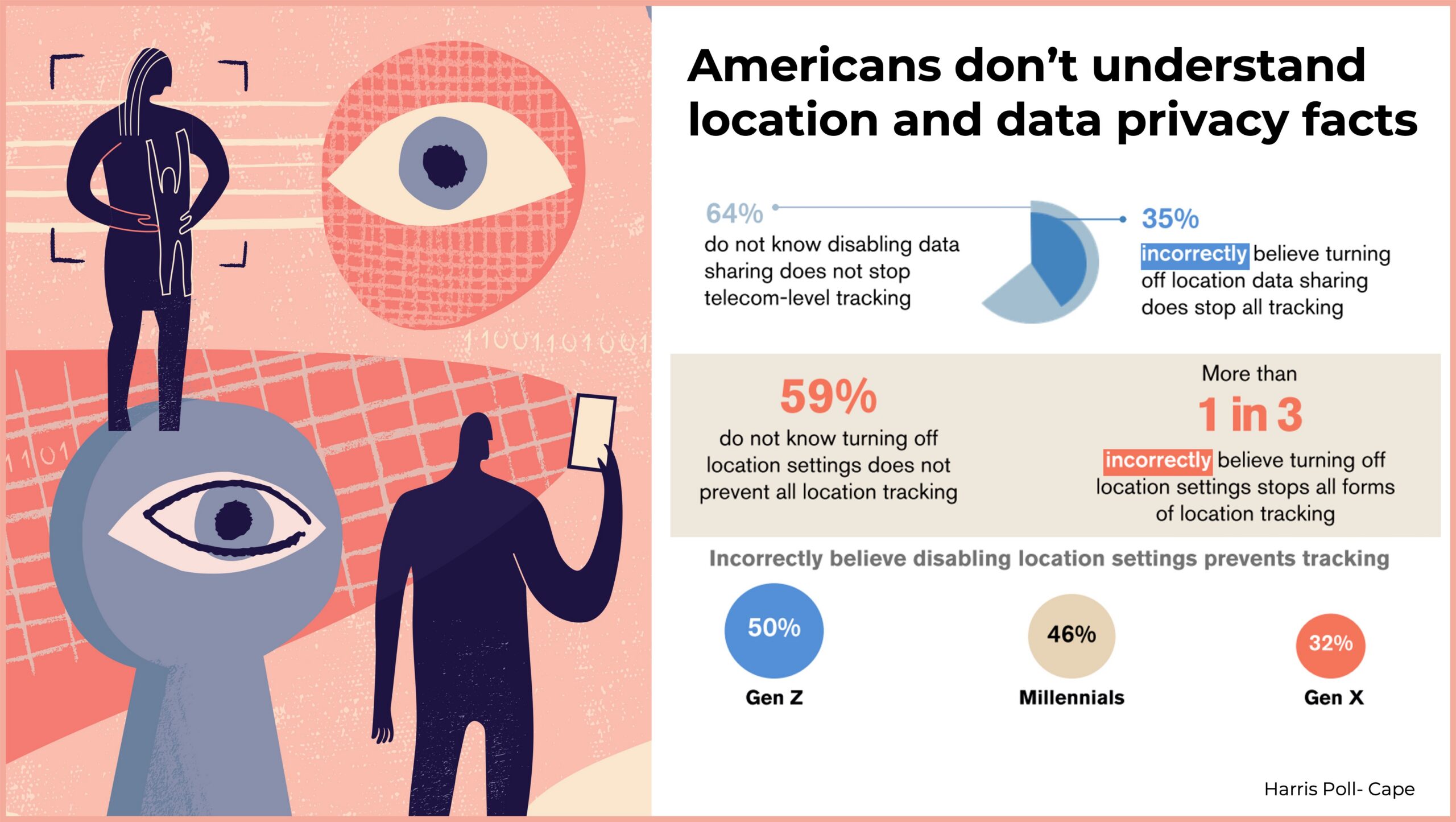
AMERICANS TRUST PHONE PRIVACY TOO MUCH
Americans deeply trust calls and texts for sensitive communication – and many misunderstand how much control they have over privacy, according to our Harris Poll research with Cape.
- 81% trust phone calls for sensitive communication, while 76% trust SMS, 76% trust email and 74% trust voicemail.
- 59% do not know that turning off location settings does not stop all forms of location tracking, while 37% incorrectly believe it does.
- 58% do not know their phone number can be transferred to another device without their permission in a SIM-swap attack.
- Four in 10 don’t know that mobile service providers can share personal information – such as contact information and usage data – with other companies for marketing and other purposes.
- 65% say they are interested in switching to a mobile provider with stronger privacy and security protections, including 74% of Millennials, 69% of Gen X, 65% of Gen Z and 55% of Boomers.
CREDIT CARD ADDICTION
With high inflation and interest rates, household debt is growing – and revolving credit cards are a growing concern, according to our Harris Poll research with NerdWallet.
- The biggest year-over-year increases in American debt include mortgages (up 3.02%), auto loans (up 2.62%), student loans (up 1.66%) and revolving credit cards (up 1.64%).
- Revolving credit card debt has been on the rise since 2021, and 47% who currently have revolving credit card debt say it will increase this year.
- 49% of consumers say carrying revolving credit card debt is normal.
- 26% with revolving credit card debt (26%) say they generally only make the minimum payment each month.
MORE THAN GOALS DRIVING WORLD CUP
While current World Cup excitement is real, the conversation drivers of risk, politics and cultural flashpoints are as intense as the game itself, according Stagwell’s Marketing Cloud Kick It Up! report.
- 72% of total World Cup visibility is driven by geopolitics, athlete activism and host-nation readiness.
- 89% of coverage around human rights and surveillance is negative, while 31% of geopolitics coverage is negative.
- Meanwhile, 68% of coverage around local soccer pride is positive, and 56% of sustainability coverage is positive.
- 39% of coverage around tourism uplift is positive.
- Consumers with household incomes above $100,000 over-index on World Cup familiarity and regard, with men 30–45 who earn more than $100,000 being a core audience.
- See also: Fans say World Cup ticket prices deserve a red card
WHAT DOES SUMMER TASTE LIKE?
We took a look at how much people care about their summer fruits and vegetables, using data from The Harris Poll and Instacart.
- Every state has a favorite: Vermont over-indexes on corn at 40% above the national average. Maine leads the country on heirloom tomatoes.
- New Mexico likes peaches more than any other state (83% above the national average), followed by Utah (+45%), Arizona (+42%) and South Dakota (+37%).
- Overall, Americans have strong feelings about peaches: 35% say a perfectly ripe peach beats any other summer dessert, and 26% like to eat them at room temperature – and say refrigerating a peach is a crime.
- Watermelon is the Southwest’s unofficial side dish – led by Nevada (36% above the national average), Texas (+35%), Wyoming: (+25%) and California (+24%).
ICYMI: In case you missed it, check out the thought-leadership and happenings around Stagwell making news:
- Media relations is having a Route 66 moment (Allison)
- A Quarter of Gen Z Is LGBTQ+. Your Brand Is Ghosting Its Own Future (Harris Poll)
- More Canadians journey south of the border for the second month in a row (Harris Poll)
- The UK is a country united on the past, but divided on the future (Harris Poll)
- AI Has a Flatness Problem: Can Agents Solve It? (National Research Group)
Newsletter
Sign Up

Related
Articles
Weekly Data
Sep 03, 2026
WHAT THE DATA SAY: 47% of Americans see personal finances worsening, 32% improving
In the News, Press Releases
Sep 02, 2026
August Harvard CAPS / Harris Poll: Trump Approval Sees Slight Improvement at 44%

In the News, Press Releases, Stagwell Marketing Cloud
Sep 02, 2026
The People Platform Unveils New Identity as Numetrix