
NEW YORK – May 3, 2022 – Stagwell (NASDAQ: STGW), the challenger network built to transform marketing, today released its 2021 Annual Report, highlighting substantial growth propelled by a uniquely high concentration of digital capabilities; strategic investments and acquisitions supporting digital and global growth; and a collaborative organizational model designed to meet the demands of larger clients in need of true integrated marketing services. Download the report here.
“In a digital economy, every screen is a canvas, every experience a data collection point, and every platform a new place for brand interaction. Brands deserve a digital-first alternative marketing network that drives business growth by connecting culture-moving creativity with leading-edge technology,” said Stagwell Chairman and CEO Mark Penn. “We strongly believe the steps we have taken to align Stagwell’s operations to support this transformation created a lasting platform for growth and shareholder value.”
Stagwell has had breakthrough performance since the combination with MDC Partners Inc., forming Stagwell Inc. in August 2021. This includes $2 billion in combined pro forma revenue for 2021. Penn’s annual CEO letter discusses Stagwell’s 2021 financial performance in the context of five transformative approaches to global marketing services delivery:
- Digital transformation and innovation, helping clients reposition their enterprises for growth in the new digital economy. Innovation shops Code and Theory, GALE, Instrument, and YML spotlight path-breaking work for Amazon Ads, MilkPEP, Google TV, Polestar and more within the report.
- Scaling creative performance for modern brands, bringing world-class creativity and modern media together to drive powerful campaign results. Work from 72andSunny for Tinder/Match Group; Anomaly for Expedia; Assembly for Nike; Doner for CUE Health; Forsman & Bodenfors for Polestar; and more illustrate ways Stagwell unleashes creative effectiveness for the modern marketer.
- Building integrated marketing solutions that align the right mix of core marketing capabilities and specialist expertise for ever-more-complex clients, exemplified in Sloane & Co., KWT Global, TEAM Enterprises, and GALE’s collaborative marketing efforts supporting Hertz’s vision for the future of electric vehicles.
- Agile global expansion, fueled by Stagwell’s Affiliate Program spanning 50+ partners across Latin America, the Middle East, Africa, Asia-Pacific, and Eastern Europe, and investments in market leaders Instrument and Goodstuff.
- Product innovation through the Stagwell Marketing Cloud, a proprietary product suite of SaaS and DaaS solutions that leverage artificial intelligence, machine learning, and mixed-reality business transformation for in-house marketers. SMC’s services span audience segmentation, influencer marketing, public relations, immersive experiences, and brand insights. The newest platform in the Cloud, ARound, helps brands create, manage, and scale augmented reality experiences for live events and retail.
To read the full report, please visit Stagwell’s website. Viewers can use QR codes throughout the document to explore referenced case studies.
About Stagwell Inc.
Stagwell is the challenger network built to transform marketing. We deliver scaled creative performance for the world’s most ambitious brands, connecting culture-moving creativity with leading-edge technology to harmonize the art and science of marketing. Led by entrepreneurs, our 10,000+ specialists in 34+ countries are unified under a single purpose: to drive effectiveness and improve business results for their clients. Join us at www.stagwellglobal.com.
PR Contact:
Beth Sidhu
pr@stagwellglobal.com
+1. 202.423.4414
IR Contact:
Michaela Pewarski
ir@stagwellglobal.com
646-429-1812
Related
Articles
In the News, Investments & Financials
Sep 28, 2026
Stagwell Increases Its Investment in Real Clear Holdings, Deepening its Commitment to High-Quality Owned Media

In the News, Investments & Financials
Aug 17, 2026
Stagwell (STGW) Announces August and September Investor Conference Schedule

In the News, Investments & Financials, Press Releases
Jul 30, 2026
STAGWELL INC. (NASDAQ: STGW) REPORTS RESULTS FOR THE THREE AND SIX MONTHS ENDED JUNE 30, 2026
Newsletter
Sign Up

CONTACT
hello@stagwellglobal.com
SIGN UP FOR OUR INSIGHTS BLASTS
This piece is part of Stagwell’s Marketing Frontiers series on the Creator Economy, Influencer Marketing, and Social Commerce.
From new monetization channels for Creators to content formats to experiment with, Web3 will unlock a new chapter for the Creator Economy. Just as fast as influencer marketing hit its stride, this next era of the internet is forcing the players of the modern Creator Economy to rethink how influence can drive results. Authenticity, deep consumer-to-creator connections, and compelling content will still be the bread and butter of good influencer strategy. But how will Web3’s focus on a decentralized internet impact the ways creators, agencies, and brands interact? How can Creators help brands explore meaningfully in the budding Metaverse – and bring consumers along for the journey? Explore POVs from Stagwell’s marketing leaders on where the Creator Economy is headed in the Metaverse.
A New Class of Creators
John Doyle, Colle McVoy
It’s difficult to imagine how the Metaverse will transform human existence writ large, much less how it will impact creators. To anchor speculation in something solid, it’s helpful to focus on three current aspects of the creator economy that may change the most when we turn on headsets, join in the Metaverse, and drop out of our IRL lives: expression, intimacy, and ownership.

Expression — Today, we may not think of event planners, architects, industrial engineers or sound designers as creators because our current social media access points don’t reward this type of talent. But in the Metaverse, it’s easy to imagine a new class of creators who at once will be able to plan an event, design an environment in which to hold the event (including lights and sound), and sell proprietary virtual products.
Intimacy — Following creators on social can feel like keeping up with a friend. As we interact in immersive, live experiences where creators exist in front of our goggled eyes, an already intimate experience will likely become even more so.
Ownership — The Metaverse will likely rewire the economics of how creators get paid. In a business with so many competing players — including tech platforms, talent agencies, and brands — creators have been subject to unfair business practices. They have formed non-profits to help restore balance in a still-forming industry. Like reinvented Bowie bonds, creators and their fans may co-own a creator’s work and the value it creates — in the spirit of Irene Zhao, an Instagram Influencer who explains why she created a DAO token to offer her fans.
Web3: Enter the Age of Virtual Avatars
Donetta Allen, HUNTER
One of the issues that most creators face today is the indirect way that they earn compensation for work – they work tirelessly to excel in the industry and in turn increase the ad revenue and stock prices for the social platforms that can flip the switch on an algorithm at any time, significantly impacting the potential income of creators. Web3 and its central premise of creating a decentralized internet will provide a more direct link between creators and their fans. Expect this to increase the influence of creators who take steps to establish their footholds in this space now. These technologies, including virtual and augmented reality, machine learning, artificial intelligence, blockchains, smart contracts, and cryptocurrencies, provide the tools to be fairly compensated for their work and allow creators and their communities to curate and claim ownership of their creations.

Ultimately, new business models centered in Web3 will lead to a more immersive, decentralized metaverse. As digital worlds evolve beyond simple games and marketing campaigns into fleshed-out worlds with avatars, digital goods, and experiences, the curious will seek guides to make the most of the experience, just as consumers currently look at Pinterest to plan a trip, or purchase items based on trending TikTok videos. Smart creators will adapt and prepare to meet – or lead – us in these digital spaces, pushing the boundaries of their current content and tapping emerging technology with the mindset to sell (or gift) it directly to their fans. Can you imagine a personalized birdwatching tour with a creator in a yet-to-be-created digital world or the opportunity to own the copyright of the first-ever video your favorite creator edited in the Metaverse? These unbelievable experiences are here, and creators and collaborative brands will lead the way in making these attainable to those who are currently only passively curious or dismissive of the vast opportunities – and income – available in future digital worlds.
Web3 and the Power of Nano-Influence
Sophia Fraioli, KWT Global
The future and the way we connect is changing rapidly. The terms Web3, NFTs, and cryptocurrency inherently bring up many questions surrounding money and how we will “pay to play” in the digital future. To adequately talk about Web3, we first need to understand Web1 and Web2. While Web1 focused on the consumption of information, Web2 concentrated on creating and sharing information under a 3rd party-controlled system. Web3 has set to disrupt this system, bringing power back to creators and individuals by decentralizing the internet.

What does that mean for the creators and influencers that dominate the spaces Web2 has created? Estimates suggest U.S. influencer marketing will surpass $4 billion in 2022, leaving some to wonder if the practices and apps of Web2 will fall by the wayside once the “switch” to Web3 has become a reality.
However, the switch for these influencers from Web2 to Web3 may not be as complicated as it seems. With the decentralization of the internet that Web3 promises to bring, there are new opportunities for creators to make a name for themselves outside of the platforms that made them famous. DAOs (Decentralized Autonomous Organizations) will allow creators to make money directly from their fan base without the middleman profiting off their efforts. NFTs, tokens, and cryptocurrency will enable fans to fund creators and potentially upend the existing relationship between creators and brands.
Trustworthiness is increasingly one of the most critical aspects of an influencer’s success, and with that in mind, it’s the nano-influencers who may gain the most under this shift. Authenticity is at the core of what Web3 promises. It will potentially be a place away from the control and persuasion of big business and those who find success in this new digital world will be those who are trusted most by their audiences.
Many say that those who profit most under Web2 will likely profit the least under Web3, but as Web3 unfolds, it’s up to agencies to pay close attention to this shift and see where we can fit into this new space. The best practices we have lived by for all brands in Web2 may be far more complicated in the Web3 space. NFTs will become a huge revenue source for some brands, while others may want to focus instead on activating their presence and engaging in the Metaverse. The change to Web3 won’t be a “light-switch” moment, but now is the time to start discussing and advising clients to be ready and stay close to their agencies as we look to succeed in this new digital universe.
Related
Articles
In the News, Press Releases, Talent & Awards
May 12, 2026
Stagwell Media Platform Appoints Dru Sil to Global Product Managing Director

In the News, Press Releases, Talent & Awards
Apr 10, 2026
Stagwell (STGW) Appoints Nicole Souza as Chief Growth Officer, North America to Accelerate Enterprise Momentum

Artificial Intelligence, Artificial intelligence, In the News, Marketing Frontiers, Press Releases, Stagwell Marketing Cloud
Apr 06, 2026
HarrisQuest Launches Lou, a Voice-Enabled AI Analyst Built Inside The Harris Poll’s Brand Tracking Platform

Newsletter
Sign Up
By
Jen Wood
SVP, Integrated Marketing
Allison+Partners
CONTACT
hello@stagwellglobal.com
SIGN UP FOR OUR INSIGHTS BLASTS

When NIL legislation became law in July 2021, it opened the floodgates for college athletes to partner with companies and monetize their success. Historically, NIL opportunities were talked about in terms of appearances and autographs. But unsurprisingly, the bulk of all NIL deals to date have leaned on the success of digital solutions from social media posts and content to NFT creation.
The first nine months of this marketplace have seen a flurry of activity, but have also exposed a few opportunity areas:
- Despite NIL legislation being touted as benefitting all college athletes, recent data from the platform Opendorse shows 51.1% of all NIL compensation has gone to college football players and 72.6% of all compensation has gone to male athletes.
- Many experts say this imbalance is a result of systemic inequities that exist in sports. Brands could help correct this imbalance by purposefully crafting NIL programs that highlight a diverse representation of athletes across both men’s and women’s sports.
- Even though there’s a desire from all stakeholders to have uniform NIL standards, there’s currently no governing body overseeing this. Depending on your industry, it’s still a bit of the Wild West in terms of who you can partner with. Rules differ by college and conference, leading some conferences to allow NIL partnerships with alcohol and sports betting companies, for instance, while other conferences and schools do not.
- Brands must do their due diligence before approaching an athlete and hire an agency, especially if they’re in a highly regulated industry, to help navigate the constantly changing landscape and make recommendations around the athletes who can help achieve their goals.
- There is great variability in the savviness and experience of those negotiating these deals, with some athletes represented by traditional agents and other athletes left to negotiate on their own. Some universities, such as Ohio State’s NIL Edge Team, have formed expressly to help athletes navigate this void. This creates inconsistencies in how services are priced and opens the door for certain athletes to be taken advantage of.
Partnering with a college athlete, as with any influencer, comes with risk. Not only are proper vetting and contract structure essential to a successful partnership, but athlete deals have more visibility than traditional influencer relationships. This heightens the opportunity for brands to be called out for unfair practices. Using tools, such as A+P’s Influencer Impact Score, helps provide consistent vetting and pricing guidance to ensure each deal is approached equitably.
One thing is for certain – the NIL marketplace’s size and influence will continue to grow. And athlete brand-building efforts will continue to be a huge focus, taking an even larger role in recruitment efforts. Not only will colleges seek to recruit college athletes who are already influencers and can bring that follower base to their school, but they’ll also look to market their institutions’ ability to help athletes build their personal brand by playing at the university. Expect athletes across all college sports to become savvier about their marketing potential and create an exponentially larger industry marketplace.
Jen Wood is senior vice president of Integrated Marketing at Allison+Partners. She’s spent the past 10-plus years of her career in Sports Marketing and Sponsorships overseeing all aspects of her clients sports marketing efforts – from sponsorship strategy development and partner identification, to negotiating multi-million-dollar sponsorship deals with collegiate and professional sports organizations and athletes, partnership activation, and ultimately measuring asset utilization and performance. She’s passionate about the opportunities sports marketing provides and is always ready to chat with an interested brand.
Related
Articles
In the News, Press Releases, Talent & Awards
May 12, 2026
Stagwell Media Platform Appoints Dru Sil to Global Product Managing Director
In the News, Press Releases, Talent & Awards
Apr 10, 2026
Stagwell (STGW) Appoints Nicole Souza as Chief Growth Officer, North America to Accelerate Enterprise Momentum
Artificial Intelligence, Artificial intelligence, In the News, Marketing Frontiers, Press Releases, Stagwell Marketing Cloud
Apr 06, 2026
HarrisQuest Launches Lou, a Voice-Enabled AI Analyst Built Inside The Harris Poll’s Brand Tracking Platform
Newsletter
Sign Up
Global Affiliate Brand New Galaxy joins the challenger marketing group to accelerate connected commerce and digital transformation for global brands; will operate as part of Stagwell Media Network
New York, NY & Warsaw, PL – April 21, 2022 (NASDAQ: STGW) – Stagwell, the challenger network built to transform marketing, today announced the acquisition of Brand New Galaxy (BNG), a leading provider of scaled commerce and marketplace solutions for 150+ global brands and 500+ e-retailers worldwide. With 600 experts across Europe, MENA, and the United States, BNG adds deep, digital-first specialization in connected commerce solutions, scaling Stagwell’s broad e-commerce capabilities to service more complex global clients. BNG has served as a partner of Stagwell via its Global Affiliate Program since 2021 and is the first acquisition Stagwell has made of one of its affiliates.
“We are pleased to welcome Brand New Galaxy to the Stagwell platform, expanding the reach of our global e-commerce offerings. Their state-of-the-art e-commerce and digital transformation technology is another reason clients are choosing Stagwell over traditional holding companies,” said Mark Penn, Chairman and CEO, Stagwell.
BNG will join the Stagwell Media Network, a global community of leading omnichannel agencies that collaborate to deliver future-facing solutions driven by digital, data, technology, and media expertise. In addition to complementing Stagwell’s data-led digital transformation capabilities, BNG offers a range of tailored solutions for accelerating end-to-end multimarket commerce, based on international insights that translate into local market opportunities.
“It is incredibly exciting to welcome Brand New Galaxy and their leadership teams to Stagwell Media Network,” said James Townsend, Global Chief Executive Officer of Stagwell Media Network and its global media agency, Assembly. “Their deep and extensive expertise in all things connected commerce sits in perfect complement to our growing portfolio of omnichannel media agencies. The addition of BNG is the natural and front-footed next step for our network to further empower the modern marketeer with more cohesive and integrated solutions across the marketing services spectrum.”
As part of Stagwell Media Network, Brand New Galaxy will continue to go to market under the BNG brand as well as collaborate with other members of the Stagwell Media Network.
Piotr Morkowski, CEO of Brand New Galaxy Holding said, “BNG was born as an ecommerce-native business and over the last five years of incredible growth, we have built a set of unique, world-class capabilities to support our global clients across the entire path to purchase. Building a global business of 600 experts in less than five years is no small achievement, but we are hungry to do much more. Joining forces with Stagwell Media Network at this stage in our journey as part of an integrated go-to-market approach is the best way for us to grow even faster and deliver on our ambitions.”
Stagwell Media Network is now home to more than 3,500 experts distributed globally across more than 20 countries and 40 offices, managing close to $5 billion in media. The Network offers omnichannel media, led by data and digital expertise that challenges the antiquated media models of legacy advertising giants. The BNG acquisition follows the January 2022 acquisition of Goodstuff Communications, one of the United Kingdom’s leading independent media agencies, supporting Stagwell’s scale and global footprint with local activation.
The terms of the deal were not disclosed.
###
About Stagwell Inc.
Stagwell is the challenger network built to transform marketing. We deliver scaled creative performance for the world’s most ambitious brands, connecting culture-moving creativity with leading-edge technology to harmonize the art and science of marketing. Led by entrepreneurs, our 10,000+ specialists in 34+ countries are unified under a single purpose: to drive effectiveness and improve business results for their clients. Join us at www.stagwellglobal.com.
About Stagwell Media Network
Stagwell’s Media Network is a group of leading omnichannel agencies home to more than 3,500 experts with an expansive global footprint across 40+ offices in 20 countries, managing close to $5 billion in media. Agencies include Assembly, Brand New Galaxy, MMI Agency, Goodstuff and Grason, creative consultancy GALE, B2B specialist Multiview, multi-lingual content agency Locaria, and travel and media experts Ink. The network offers marketers a more dynamic partner for global B2B and B2C solutions spanning data, technology, media, and creativity aimed at accelerating business growth for brands worldwide.
About Brand New Galaxy
Brand New Galaxy is a fast-growing leading provider of marketing and technology solutions built to drive commerce and digital transformation for brands. Founded in Warsaw, Poland, in 2017, BNG has grown to 600+ employees with offices in Europe, North America, and the Middle East. BNG has been named “Debut of the Year 2018”, “Success of the Year 2019 & 2020,” and “Growth of the Year 2021” by PRESS magazine’s prestigious agency ranking, proving its position as a dynamic global agency. BNG’s data-driven approach makes brands better connected with consumers in complex marketing and technology ecosystems. This gives more than 150 brands and Fortune 500 clients a true strategic partner, both on a global and local level.
Related
Articles
In the News, Investments & Financials
Sep 28, 2026
Stagwell Increases Its Investment in Real Clear Holdings, Deepening its Commitment to High-Quality Owned Media
In the News, Investments & Financials
Aug 17, 2026
Stagwell (STGW) Announces August and September Investor Conference Schedule
In the News, Investments & Financials, Press Releases
Jul 30, 2026
STAGWELL INC. (NASDAQ: STGW) REPORTS RESULTS FOR THE THREE AND SIX MONTHS ENDED JUNE 30, 2026
Newsletter
Sign Up
Originally released on
CONTACTS
PR Contact
Beth Sidhu
pr@stagwellglobal.com
202-423-4414
IR Contact
Michaela Pewarski
ir@stagwellglobal.com
646-429-1812
NEW YORK, NEW YORK, APRIL 20, 2022 – Stagwell (NASDAQ: STGW) announced today the Company will report financial results for the three months ended March 31, 2022 on Friday, May 6, 2022, before the market open.
Stagwell will host a video webcast to review those results the same day at 8:30 AM (ET). To register and view the webcast, visit this link.
A replay of the webcast will be available following the event at Stagwell’s website, https://www.stagwellglobal.com/investors/.
About Stagwell Inc.
Stagwell is the challenger network built to transform marketing. We deliver scaled creative performance for the world’s most ambitious brands, connecting culture-moving creativity with leading-edge technology to harmonize the art and science of marketing. Led by entrepreneurs, our 10,000+ specialists in 34+ countries are unified under a single purpose: to drive effectiveness and improve business results for their clients. Join us at www.stagwellglobal.com.
IR Contact:
Michaela Pewarski
ir@stagwellglobal.com
646-429-1812
PR Contact:
Beth Sidhu
pr@stagwellglobal.com
202-423-4414
Related
Articles
In the News, Investments & Financials
Sep 28, 2026
Stagwell Increases Its Investment in Real Clear Holdings, Deepening its Commitment to High-Quality Owned Media
In the News, Investments & Financials
Aug 17, 2026
Stagwell (STGW) Announces August and September Investor Conference Schedule
In the News, Investments & Financials, Press Releases
Jul 30, 2026
STAGWELL INC. (NASDAQ: STGW) REPORTS RESULTS FOR THE THREE AND SIX MONTHS ENDED JUNE 30, 2026
Newsletter
Sign Up
CONTACT
hello@stagwellglobal.com
SIGN UP FOR OUR INSIGHTS BLASTS
This piece is part of Stagwell’s Marketing Frontiers series on the Creator Economy, Influencer Marketing, and Social Commerce. To view other content in the series, visit our Creator Economy page here.
As brands explore the Metaverse, expert investment and experimentation with digitally rendered brand ambassadors to follow. When should brands leverage virtual influencers over IRL creators? How can they navigate anxieties around virtual perfectionism, unrealistic beauty standards, and representation as they play in this space? What opportunities do virtual influencers afford that real-life creators may not? We asked influencer and social experts from around Stagwell to share their POVs:
Web3: Enter the Age of Virtual Avatars
Donetta Allen, HUNTER
First, let’s answer the question of “what is a virtual influencer?” A virtual influencer is a fictional, computer-generated personality that acts, speaks, and posts on social media or appears in the Metaverse – like a human, but in a much more controlled way. The tech-savvy, faceless creators and brands behind virtual influencers decide how their avatar will act, dress, who they date, and what drama will – or won’t – appear on the timeline. The ability to work with a fictional character whose every move is controlled by a creator has an appeal for brands in a world full of opinions and photo re-shoots, even in a world where “authentic connection” is often a top reason for marketers to work with influencers.
That said, brands should begin exploring virtual influencers ASAP. Digital avatars are becoming increasingly common as brand partners, with companies like Adidas, Samsung, and Fortnite engaging virtual influencers for recent campaigns. It is expected that the prominence of marketers tapping into the virtual influencer marketplace will increase as the metaverse continues to advance.
Virtual influencers’ carefully curated images allow for greater messaging control, alignment with brand values, and less risk of controversy throughout the duration of the partnership. Like real creators, virtual influencers are diverse – from their ethnicity, gender, size, to interests – and brands should prioritize diversity as they do with real creators. While costly to develop, virtual influencers may be less expensive than traditional influencers to engage for brand campaigns. They are also reported to have 3x the engagement rate of traditional influencers, adding yet another compelling reason to consider virtual influencers for your next campaign. As more brands seek to work with these stylized, fictional characters and new opportunities emerge, we’ll start to see the diversification and expansion of the virtual influencer landscape so that it more closely reflects the human experience.
Virtual Influencers & Transmedia Brand Campaigns
Natalie Goenaga, KWT Global
Digitally-rendered influencers have made a splash on our screens since 2016 when the world was introduced to Lil Miquela. Seemingly appearing out of thin air, Lil Miquela was a thoughtfully curated personification of Instagram and Instagram culture created by a startup in Los Angeles made to “question the social norms of online platforms”- while making the mysterious company millions of dollars in sponsorships. Over the last 6 years, Lil Miquela has amassed a following of over 3 million, participated in campaigns with the likes of Bella Hadid for Calvin Klein, walked with Prada for Milan Fashion Week, modeled for Chanel, Coach, Balenciaga, and named by TIME as one of “The 25 Most Influential people on the Internet.” Did I mention she has a budding career as a pop star with over 198,000 monthly listeners on Spotify?
 As the Metaverse, CGI, and AI continue to creep onto center stage, the rise of these digital influencers is sure to follow. But in a cancel-culture world that holds a magnifying glass to transparency and authenticity from creators and brands how will these perfectly engineered creators navigate the delicate landscape and how can brands appease the masses? In the example of Lil Miquela – it is worth noting that the CGI Brazilian-American 19-year-old has serious activism chops. A vocal ally, she actively supports Black Lives Matter, the Innocence Project, LGBTQ+ Life Center, the Downtown Women’s Center, and Justice for Youth. But is that enough? The digital influencer world is certainly conforming to these changes with perfectly imperfect characters that challenge the beauty industry and their inspiring backstories and diversity to conform to the new mold. And while all creators carefully tread this sensitive landscape, with virtual influencers there is a sense of more control and brand safety and stability as their presence is meticulously and carefully crafted.
As the most active consumers of influencer content, Millennials and Gen-Z want influencers and brands to do one thing well – and that’s to keep it real. With virtual influencers, that’s admittedly a bit harder to do. Balancing the line of when to activate real influencers and those in the digital space is a new tension brands will have to navigate but provides plenty of creative and unique opportunities. Activating virtual influencers for campaigns in an overly saturated influencer market creates thumb-stopping content for those “big splash” moments – like the recent Adidas collaboration with virtual influencer RUBY9100M who designed a custom sneaker for the brand and released her debut single alongside the launch.
Another powerful tool that can be leveraged by digital influencers? Transmedia. This newer storytelling technique can tell a single story or story experience across multiple platforms and formats using today’s current technology. Much like a traditional 360 campaign, transmedia campaigns allow digital influencers to tell your brand’s story and transition it across multiple virtual environments with ease. A virtual influencer will remain recognizable anywhere, so brands can leverage them in a TikTok video, Instagram post, or in a video game. And when it comes to costs, brands are able to activate virtual influencers for larger-than-life ideas that may not be possible with IRL creators without breaking the bank. Want to “fly” your digital creator around the world? Want to launch a campaign with them in space? Virtually anything can become possible.
Virtual or Real, the Strategy is the Same
Kelli Goss Johnson, Allison+Partners
Brands should approach virtual influencers as they would an IRL creator: for authentic brand partnerships, campaigns, awareness and messaging, while ensuring that the brand’s consumers and social audience fully understands that the virtual influencer is exactly that (and not a real human or animal). Virtual influencers can be utilized over IRL creators when the brand wants more control over the content and its many aspects, in addition to creative freedom of the content developed.

Real or not, these influencers should also be ‘on-brand’ and have the same value properties as the brand, while offering loyalty, exclusivity and brand affinity to the partnership or campaign. They are also brand safe (you won’t catch them in an unflattering paparazzi moment or posting something uncomplimentary on social media) and can be activated when, where and how a brand wants them to. And while virtual influencers have been criticized for their perfectionism, so have IRL creators, leaving the door open for virtual influencers to socially share some of their more imperfect moments and make them more relatable or ‘real.’ There is also opportunity to cross both an IRL influencer into the Metaverse with a virtual influencer, supporting the authenticity of the virtual influencer while introducing the IRL influencer into a fully digital ecosystem.
Related
Articles
In the News, Press Releases, Talent & Awards
May 12, 2026
Stagwell Media Platform Appoints Dru Sil to Global Product Managing Director
In the News, Press Releases, Talent & Awards
Apr 10, 2026
Stagwell (STGW) Appoints Nicole Souza as Chief Growth Officer, North America to Accelerate Enterprise Momentum
Artificial Intelligence, Artificial intelligence, In the News, Marketing Frontiers, Press Releases, Stagwell Marketing Cloud
Apr 06, 2026
HarrisQuest Launches Lou, a Voice-Enabled AI Analyst Built Inside The Harris Poll’s Brand Tracking Platform
Newsletter
Sign Up
By
Jay Powell
SVP, Communications,
MMI Agency
CONTACT
hello@stagwellglobal.com
SIGN UP FOR OUR INSIGHTS BLASTS
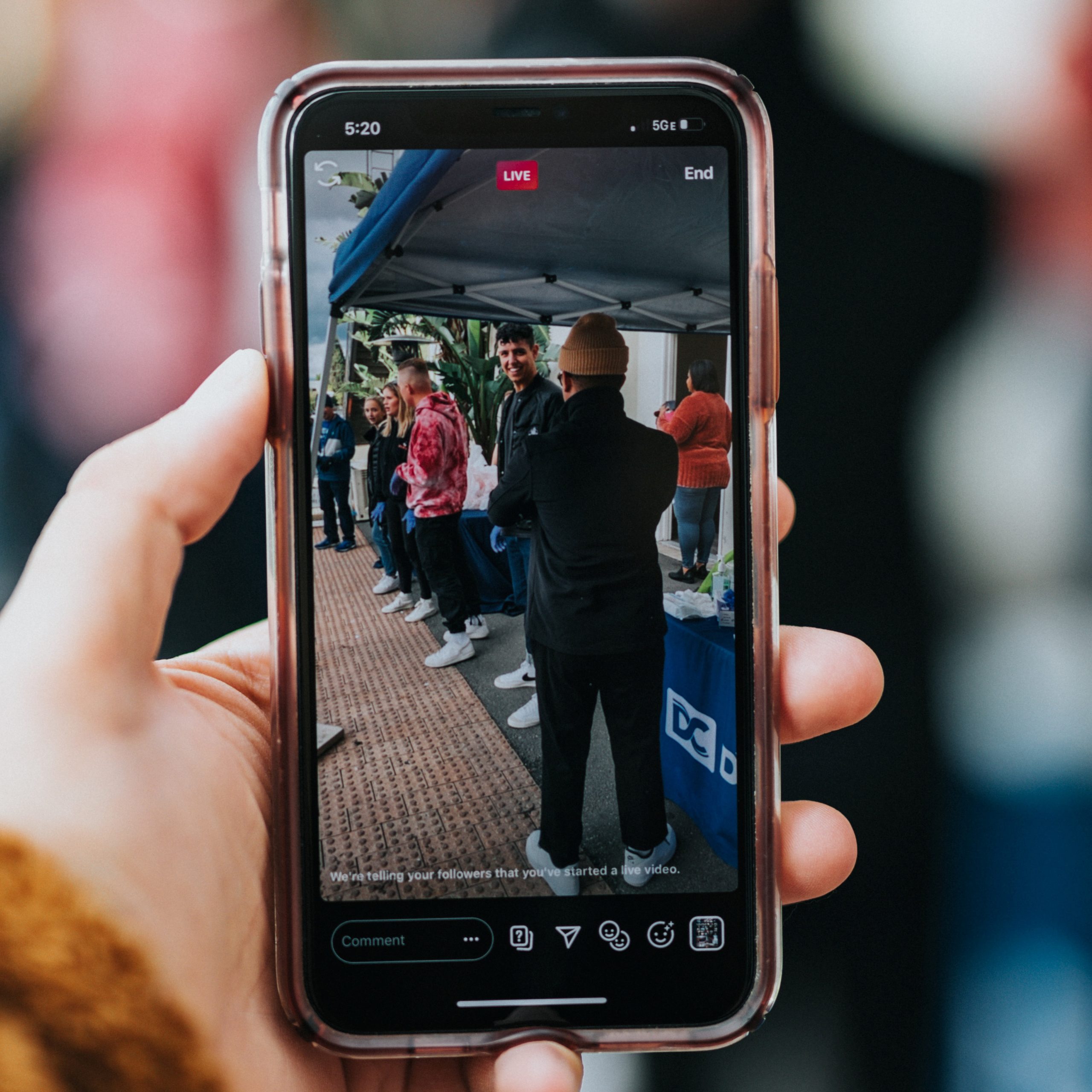
At the height of the COVID-19 pandemic, stay-at-home orders and social distancing drove hordes of Americans to their devices to connect with family and friends. It also helped fuel more online purchases that might typically have been made in-store. Cue the rise of shoppertainment – a phenomenon at the intersection of online shopping and influencer livestreaming that brands are eager to leverage, emboldened by the success live-streamers have found across Asia-Pacific.
As an integrated communications and media firm that has remained at the forefront of marketing innovation since inception, MMI is uniquely qualified to support brands through this latest evolution of commerce. After digging into performance data, examining industry reports, and speaking with brands and influencers, we have compiled a quick start guide to help your brand execute a winning influencer livestream campaign.
Shoppertainment in the digital age is the latest way brands utilize influencers to make the social shopping experience more entertaining and authentic. Shoppertainment rests on influencer livestreaming, which is often less polished than the slickly-produced shorts created by brands and influencers for official campaigns. For leaders worried about brand safety and consistency across platforms, this imperfect content might be troubling. But Caroline Vazzana (@cvazzana), style influencer, says the imperfection of livestreaming is its charm. “The beauty of going live is that not everything needs to be (or can be) perfect!”
At MMI, we love helping brands connect with their target audiences in new ways and across new platforms. If you’re planning to tap into growing trends that can positively impact your bottom line, like livestreaming, our influencer marketing team has the experience to support you..
Livestreams Sell Out the Digital Shelf in China
In 2020, the shoppertainment took off in China; two-thirds of Chinese consumers purchased products via livestreams that year. During Taobao’s 2021 Single’s Day, China’s unofficial shopping holiday that is four times larger than Black Friday in the U.S., China’s two most famous livestreaming stars sold a total of $3 billion worth of products via separate livestreaming sessions. The verticals driving this success in China are cosmetics, beauty products, fashion, and food.
Influencer livestreaming is gaining traction, as evidenced by increasing viewership and conversion rates. Per Bloomberg, social commerce is expected to accelerate over the next few years, with U.S. sales reaching $1.2 trillion by 2025.
Instagram and TikTok Take Center Stage
Initially a photography-focused app, Instagram now prioritizes video content to keep up with its competitors, most recently with the introduction of Instagram Live Shopping. MMI facilitated a collaboration between a large skin care brand and beauty and lifestyle influencers Paola Matute (@paox33) and Melody Acevedo (@melodyslife) to promote holiday season self-care products via Instagram Live. 44% of Instagram users shop Lives weekly, making them an effective way to place your product directly in front of consumers.
Brands are also finding success on “the QVC for Gen Z,” TikTok Live, whose “Top LIVEs” category makes it easy for live content to be discovered by users on the platform. MMI executed a TikTok Live on behalf of a major hair care brand, hosted by Vazzana, to promote an innovative new hair styling product line. Viewers chatted with Caroline during the session and posed questions that she answered live, creating an interactive environment for viewers. Click-through rate to the brand’s product page exceeded campaign expectations.
Influencers can seamlessly livestream beyond social channels via a brand’s website by incorporating livestream shopping platforms like buywith and talkshoplive. This allows the audience to shop directly on the e-commerce site, along with the influencer, in real time, removing path-to-purchase friction, increasing engagement and boosting conversions. Large brands and publishers who are already livestreaming shoppable content across these platforms include Walmart, Buzzfeed and Hearst.
Best Practices for Lively Livestreaming
The world of influencer livestreaming can be daunting to brands that are accustomed to controlling every aspect of influencer content development. MMI’s philosophy for content creation is to give influencers “freedom within a framework” to do what they do best and create content they know their followers will engage. MMI compiled this list of tips to consider as you craft your influencer livestreaming strategy.
Go with the platform where your audience spends the most time..
Meet your audience where it’s already engaged to maximize the reach and life cycle of your content.
Go with someone your audience trusts.
87% of Instagram users say influencers have inspired them to make a purchase. Collaborate with an influencer your audience already looks to for advice to drive conversions.
Go with someone you trust.
Identify creators you’ve worked with in the past who will understand the nuances of your brand as well as the required FTC and platform-specific disclosure policies.
Go with the content format your audience engages with most.
Examine past organic social and influencer campaign performance to determine the content type(s) with which your audience is more likely to interact.
Go with the platform where your audience spends the most time..
Meet your audience where it’s already engaged to maximize the reach and life cycle of your content.
Livestreaming, shoppertainment, and social commerce are new domains for today’s brands. To drive results, they will need to get comfortable with leaning on influencers and ceding creative control where necessary. We’ve found, though, that the best collaborations occur when influencers are given the freedom to create what works for their audiences. Acevedo affirms that the resulting livestream “feels authentic, yet informative for the audience.” When you’re ready to see influencer livestreaming work magic for your brand, MMI’s influencer marketing team is here to support you every step of the way.
See how MMI helps brands break through the noise and stand out here.
MMI Agency is a modern brand lab where performance meets possibility. Our mission is to inspire action by combining our end-to-end approach to reaching consumers with our tenacity for data.
Related
Articles
In the News, Press Releases, Talent & Awards
May 12, 2026
Stagwell Media Platform Appoints Dru Sil to Global Product Managing Director
In the News, Press Releases, Talent & Awards
Apr 10, 2026
Stagwell (STGW) Appoints Nicole Souza as Chief Growth Officer, North America to Accelerate Enterprise Momentum
Artificial Intelligence, Artificial intelligence, In the News, Marketing Frontiers, Press Releases, Stagwell Marketing Cloud
Apr 06, 2026
HarrisQuest Launches Lou, a Voice-Enabled AI Analyst Built Inside The Harris Poll’s Brand Tracking Platform
Newsletter
Sign Up
By
Kaitlyn Schembri
Contributor, Koalifyed
CONTACT
hello@stagwellglobal.com
SIGN UP FOR OUR INSIGHTS BLASTS
With the advent of social commerce, influencers have never been more important. Global sales driven by social commerce will triple to $1.2 trillion by 2025. At the same time, user-generated content is on the rise, accounting for 39% of weekly media hours consumed by Americans. We’re living in the age of nano-influence, driven by the professionalization of the Creator Economy and brand investments in social commerce.
In the old days of influencer marketing, celebrity partnerships were strong drivers of top-of-funnel marketing. A-listers like Betty White gave brands wide-ranging exposure. No wonder brands lead with celebrities at the Super Bowl; on a stage with a hefty price tag, leveraging talent with a built-in fan base makes sense. Salesforce’s recent Big Game ad with Matthew McConaughey was a memorable callback to his 2014 hit “Interstellar.” It likely did little to drive conversion when it aired but drove conversation for days afterward.
With the rise of social commerce and performance measurement, creators boast an enviable position in today’s brand marketing playbook. In-app social marketplaces that let consumers shop the entire funnel on Instagram and TikTok mean the power of a single influencer post holds more weight than ever before. Consumers no longer need to see your website to make a sale – and it’s likely they don’t want to!
Nano-influencers are today’s driver of commerce. TikTok, more than any other platform, is driving this trend. Over the past two years, TikTok has democratized the digital world, allowing creators to reach a large audience on the app without a substantial following (and, in some cases, hardly any following at all). The algorithm prizes discovery over drudgery, priming niche content and creators with fewer than 10K followers to capture eyeballs (and results).
In this landscape, nano influencers are an authentic way for brands to connect with consumers. Frequently the tastemakers and thought leaders of their niche communities, they command the respect of small but mighty followings. Consumers are more likely to view them as friends than other-worldly celebrities, adding trust and engagement. Studies have shown that while 3% of consumers would consider buying a product in-store if promoted by a celebrity, that number jumps to 60% for a nano-influencer.
Dunkin’ recently tapped into various influencers with fewer than 50,000 followers to power its latest “coffee-first” campaign. Analysis showed nano-influencers generated higher engagement rates, with an average engagement rate of 5.2%. Dunkin’ succeeded in organically growing a support base for its coffee ambitions.
Nano influencers also can help brands drive a positive impact on diversity & inclusion. Being purposeful in curating your influencer marketing partnerships can ensure your brand does its part in platforming diverse perspectives. Consider how nano-influencers from yet-unengaged segments might supplement your core marketing activities for major product launches. Launching a new foldable exercise bike for the WFH generation? Consider partnering with TikTok influencers who produce content on career acceleration for P.O.C. talent. You never know what content may come of the effort!
As nano influencers proliferate marketing campaigns, it’s critical brands have agile, scalable solutions for influencer marketing management. Creators should be natural extensions of the marketing team. Investing in the right tech to reach, negotiate, and communicate with them is essential for success in this era of super-charged social commerce.
When leveraging the power of nano influencers, do not overlook the vetting process. Brand safety controls are key in the wild west of today’s platform-fragmented internet, as is closely managing influencer spending. Many marketers fall prey to the hidden costs of fake follower bots on their influencer efforts, which threaten to diminish a campaign’s chances of success and harm trusted influencer relationships. Bot detection is vital to ensuring brands are getting the complete picture. At Koalifyed, we leverage our platform’s built-in S.N.I.F.F. technology to help brands reach a higher R.O.I. for their influencer marketing investments.
We hear success stories every day from brands utilizing nano-influencers to hit their marketing KPIs. We predict the gap between the brands who invest in this strategy versus those who don’t will only widen in the coming years as platforms double-down on social commerce development and authentic brand marketing remains a priority for consumers.
Related
Articles
In the News, Press Releases, Talent & Awards
May 12, 2026
Stagwell Media Platform Appoints Dru Sil to Global Product Managing Director
In the News, Press Releases, Talent & Awards
Apr 10, 2026
Stagwell (STGW) Appoints Nicole Souza as Chief Growth Officer, North America to Accelerate Enterprise Momentum
Artificial Intelligence, Artificial intelligence, In the News, Marketing Frontiers, Press Releases, Stagwell Marketing Cloud
Apr 06, 2026
HarrisQuest Launches Lou, a Voice-Enabled AI Analyst Built Inside The Harris Poll’s Brand Tracking Platform
Newsletter
Sign Up
BY
Christine McDermott
VP, Veritas/Meat & Produce
CONTACT
hello@stagwellglobal.com
SIGN UP FOR OUR INSIGHTS BLASTS
This piece is part of series on Social Commerce, Influencer Marketing, and the Creator Economy.
A decade ago, brands looked to influencer agencies to connect with the ‘who’s who’; today, they come to us to wield the transformative power of social influence through their entire marketing stack. As part of the agency that felt so strongly about the term “influencing the influencers” that we trademarked it, I am keenly aware that influencer marketing long predates the current hype that social media has generated around the industry. When we look at the prioritization of influencer marketing in today’s marketing mix, it’s no longer considered a nice to have but rather a core component of brand planning.
It wasn’t always this way, though. This has provided a fascinating opportunity to watch the shift in the marketplace from a client service perspective. In today’s creator-centric economy, brands require influencer marketing agency partners to keep apace the transformation in this space.
From Impressions to Engagement
In the days of blogs and burgeoning social media channels, the most significant opportunity influencers afforded was the chance to reach new audiences. The focus was almost exclusively on maximizing the number of impressions from influencer content. Guaranteed organic reach and high blog readership provided cost-effective ways for brands to reach audiences that otherwise may never have interacted with them. The deep relationships that influencer marketing agencies held with influencers were critical to obtaining the best earned and paid opportunities for our brand partners and allowed for agility in influencer placements.
As social channels moved into the spotlight, accounting for more media hours consumed across generations, the focus shifted to engagement. The goal was to measure the attention content could generate through authentic connection with audiences in an increasingly competitive digital world. With this, we saw the rise of micro and nano influencers who built strong relationships through two-way communication with their audiences, maintaining consistently high engagement. Trusted recommendations from the right influencers could bring your brand into the consideration set for your target audience. Dedicated audiences of nano influencers also provided an opportunity to access niche consumer segments that otherwise would be challenging for brands to find. Our key to success was pairing the right influencers with our brands, ensuring alignment on values and demographics.
The Creator Economy
Today, getting the right message to the right person at the right time has never been more critical – or more difficult as the consumer ecosystem becomes increasingly sophisticated. New channels and content formats provide evermore opportunities to attract and engage new and existing audiences with relevant content. Moving influencer marketing from a single tactic to a full-funnel approach creates a new world of opportunity for brands, while at the same time raising countless new considerations. With all these factors to contend with, the role influencer marketing agencies take on has never been more critical. Today’s influencer marketing agency partners must help clients navigate this ever-changing world by:
- Going beyond the numbers: As data-driven marketers, it can be attractive to make decisions based solely on the immense data we now have at our fingertips. While these are fundamental parts of our discovery and vetting processes, we believe it’s equally important to review the qualitative elements of an influencer agreement: alignment with brand values, the types of social conversations creators drive among their followings, and, importantly, any content or connections that may increase brand risk.
- Capitalizing on available technology: Today’s digital tools provide capabilities that aid every step of the process: diving deep into audience demographics, reviewing years of content to ensure brand safety, authenticating audiences to remove bot traffic, and analyzing results. The available options can also be overwhelming. Here, the right mix of talent (agency experts with a deep understanding of the landscape) with technology (digital SaaS and DaaS tools) can supercharge campaign results.
- Keeping human connection at the center: True influence is built on strong connections between agencies and influencers and influencers and their audiences. Authentic connection is essential, from the relationships we build to the content we create.
- Letting creators be creative: Our influencers are partners in the creative process, not simply another outlet or a channel to distribute brand messages. Influencers know their audiences better than anyone. Leaning into their insights and creativity will lead to more authentic content and experiences that resonate. True partnerships with influencers allow for co-creation and collaborations that can excite and convert.
- Researching and reviewing: Due to the steady growth of influencer marketing, we now have a wealth of research to help inform and guide everything from partnership models to accurate approaches for optimizing reach. Every campaign is an opportunity to test, learn, and then review performance to better optimize results in the future.
There has been a tremendous acceleration in influencer marketing growth and investment. When done well, it works. When we examine the transformation of influencer marketing and the creator economy in just a few short years, it becomes clear that more evolution is to come. Leaning on agency partners with deep knowledge of the discipline, facility with the technology tools driving efficiency through the space, and authentic relationships with influencers will help brands get the most out of this fast-moving space.
Related
Articles
In the News, Press Releases, Talent & Awards
May 12, 2026
Stagwell Media Platform Appoints Dru Sil to Global Product Managing Director
In the News, Press Releases, Talent & Awards
Apr 10, 2026
Stagwell (STGW) Appoints Nicole Souza as Chief Growth Officer, North America to Accelerate Enterprise Momentum
Artificial Intelligence, Artificial intelligence, In the News, Marketing Frontiers, Press Releases, Stagwell Marketing Cloud
Apr 06, 2026
HarrisQuest Launches Lou, a Voice-Enabled AI Analyst Built Inside The Harris Poll’s Brand Tracking Platform
Newsletter
Sign Up
New global office led by Vinicius Reis will anchor Stagwell’s investment in Latin America, connecting best-in-class services in the region for accelerated growth
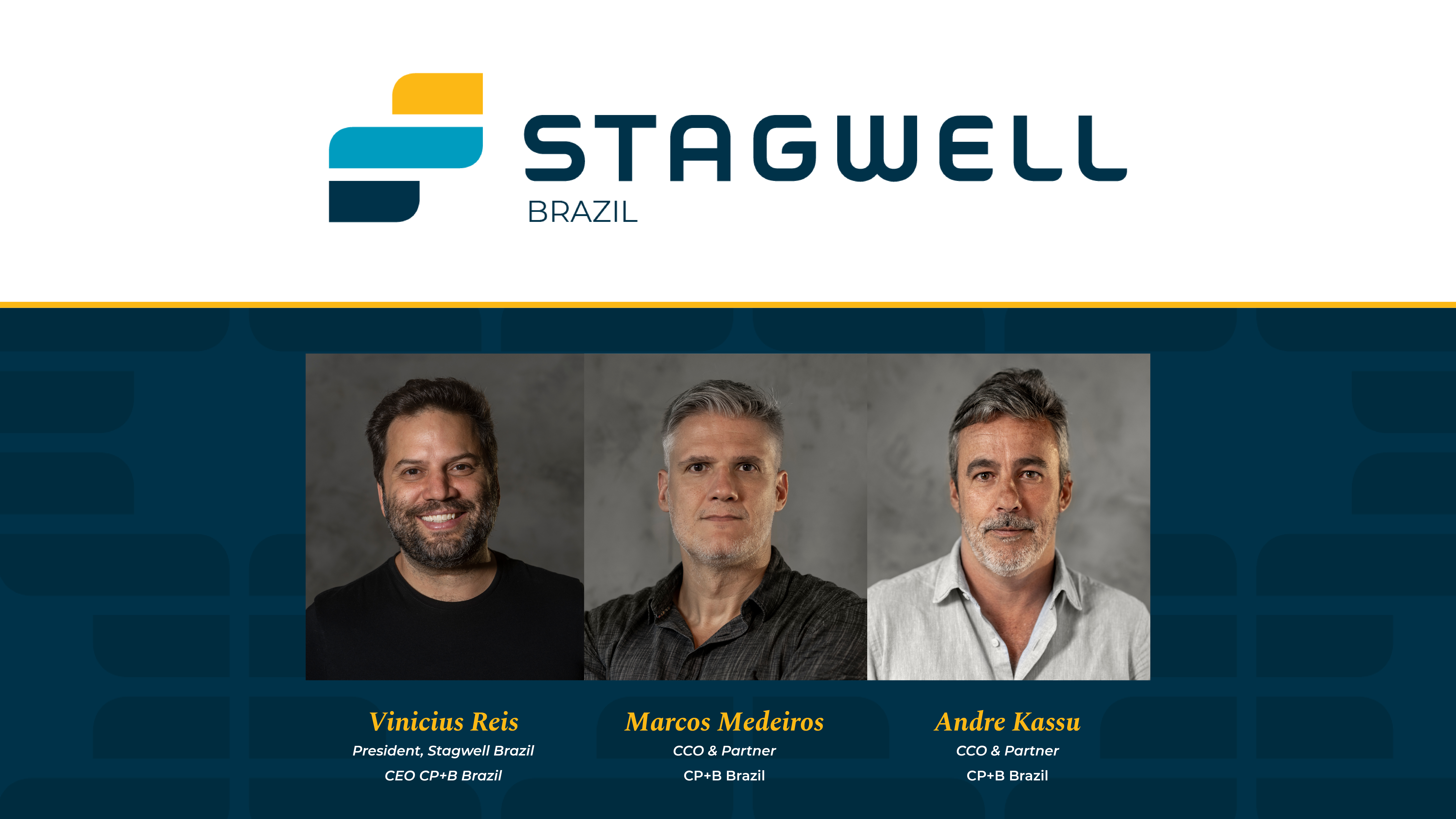
New York, New York – April 13, 2022 – Stagwell (NASDAQ: STGW), the challenger network built to transform marketing, today announced the opening of a new global office in Brazil to accelerate the company’s growth in Latin America and drive collaboration across its local agencies and affiliate partners. Stagwell Brazil is the second international office the company has opened in 2022; in January, Stagwell launched an office in Singapore to accommodate its growth throughout Asia-Pacific.
Vinicius Reis will lead the office as President, Stagwell Brazil, alongside CCO & Partner CPB Brazil Andre Kassu and CCO & Partner CPB Brazil Marcos Medeiros. They will work to drive growth and bolster capabilities to serve regional and global clients seeking to reach consumers in the Latin American market. Reis will also continue to lead operations at Stagwell agency CP+B Brazil where he, Marcos, and Andre, have built the agency into a regional force for blue-chip clip engagements with Stella Artois, AB InBev, McCain, Amazon, Activision, Blizzard, Bauducco, PicPay, 99 (DiDi), Diageo, and others. Prior to CP+B Brazil, Reis served as CEO of Havas Digital and held international executive roles at DDB Miami and Lowe Worldwide.
“We’re excited to enter this new chapter of our ambitious global expansion, returning to a region I’ve long believed to be the front door to international expansion for modern brands,” said Mark Penn, Chairman and CEO, Stagwell. “Stagwell Brazil will be a crucial player in the LATAM marketing ecosystem as we continue to grow our best-in-class offering for global clients.”
“Stagwell’s mission to transform marketing with the power of creativity, data and technology is a powerful differentiating force in the market right now, and we’re excited to contribute the network’s growth,” added Reis. “Our agencies and partners across Latin America represent the best in modern marketing expertise. With Stagwell Brazil, we have the opportunity to drive region-wide collaboration in service of our clients.”
Stagwell agencies in Brazil include global travel media firm Ink, communications network Allison+Partners, CP+B Brazil, YML, Locaria, and Code & Theory. Additionally, Stagwell has significantly expanded its footprint across LATAM over the past year via affiliate partnerships with recognized content and media agency networks Anchor Worldwide, Grupo Garnier and The Lab, with teams distributed across Aruba, Costa Rica, Colombia, Curacao, Mexico, Nicaragua, and Panama. Stagwell’s Global Affiliate program has to date signed over 50 affiliates worldwide, representing countries across Latin America, Asia-Pacific, Middle East and North Africa, and Eastern Europe.
About Stagwell
Stagwell is the challenger network built to transform marketing. We deliver scaled creative performance for the world’s most ambitious brands, connecting culture-moving creativity with leading-edge technology to harmonize the art and science of marketing. Led by entrepreneurs, our 10,000+ specialists in 34+ countries are unified under a single purpose: to drive effectiveness and improve business results for their clients. Join us at www.stagwellglobal.com.
Related
Articles
In the News, Press Releases, Talent & Awards
Sep 15, 2026
Code and Theory Honored by Fast Company’s Innovation by Design for Four Consecutive Years
In the News, Press Releases, Talent & Awards
Sep 15, 2026
Stagwell Strengthens Assembly Leadership with Two Key CEO Appointments


Newsletter
Sign Up