By:

Nolan Mendoza
Stagwell Jr. Designer 

This Hispanic Heritage Month, Stagwell is collaborating with creatives across its global network to curate artwork that reflects their cultural heritage. Our series continues with a contribution from Stagwell Jr. Designer Nolan Mendoza called “The Diablitos.”

“Growing up in a mixed Mexican American household, tradition and art shaped my early interests for design. There is something unique and proud about Mexican style, which fuses bright colors and humanist shapes. Everything is designed by hand. And the art is often heavily influenced by Catholicism. I’ve carried all of those techniques and styles into my own personal work today. The Diablitos is an ongoing personal project born of processing Catholic guilt and being queer while trying to balance and maintain my relationship with a higher power. Each piece is hand-carved from linoleum and printed with ink, displaying its own unique and original marks and qualities.”


Nolan joined Stagwell in 2021 to help transform its visual identity. Prior to Stagwell, Nolan worked as a designer at Gibson & Dehn and as a model represented by Wilhelmina, where he walked New York Fashion Week.

Connect with Nolan on LinkedIn

Next: Enter Peruvian Wakanda with Observatory’s Christian Silva

Related

Articles

Post Thumbnail
Post Thumbnail
Post Thumbnail

Newsletter

Sign Up

By
CONTACT

hello@stagwellglobal.com

SIGN UP FOR OUR INSIGHTS BLASTS

Campaigns this cycle are in a content arms race and that has one top Democratic firm eyeing companies that do influencer marketing.

Early in 2020, SKDK made the first two acquisitions in the firm’s history ,  acquiring Seward Square, which had an expertise in digital persuasion, and making its founder, Jason Rosenbaum, the head of its digital practice. It also bought financial/corporate media relations shop Sloane & Company . 

Now, as Doug Thornell prepares to take over from Josh Isay as the next CEO of SKDK, the firm has influencer marketing companies in its sights.

“[I]f you’re looking at how both corporate brands and also other entities are communicating and trying to reach customers, social media influencers are becoming more and more important and many of these folks are viewed as trusted voices,” Thornell told C&E. “I think that’s an important part of where we’re headed.”

OTT is another critical part of this cycle’s content race.

“We’re doing a lot more OTT streaming content than we have,” said Thornell, a 12-year veteran of the media/comms consulting firm who will remain head of its political advertising department until he takes over from Isay in January. “That’s just going to become where the market goes.”

As for finding the right media balance heading toward the November election: “It’s OTT, it’s streaming, scalable content and it’s also figuring out how you deploy social media influencers in a smart and appropriate way. Those are the things we’re looking at.”

Thornell recently spoke to C&E in a wide-ranging interview about the future of the consulting industry, but he also touched on a more immediate debate for the left: whether to invest in base mobilization or persuasion advertising at the end of a midterm cycle that has been one of the most tumultuous in recent memory.

“I think it’s a mistake for any campaign or, quite frankly, the Democratic Party to think about these folks as just GOTV targets who you communicate [with in the] last three to four weeks,” he said. “You have to treat them as persuasion targets that you communicate with very early on.”

Thornell noted that he ran a program for the NAACP in 2020 that advertised in 30 markets, starting in July with a message to recruit volunteers through radio, digital and some TV. The program then deployed those volunteers in the fall to talk to infrequent voters.

“It was heavily focused on digital content that was motivational,” he said. “It’s not just Black voters, or Hispanic voters, this is young voters, too. These are voters who should be voting Democratic, who will if they feel like they have skin in the game. I believe that base voters are persuasion voters and we need to treat them that way.”

He also touched on the “immense” appetite for content in this cycle.

“It’s a mixture of things that we’re used to traditionally like the 30-second TV spot, but now [it’s also] quick 6-second, 15-second videos. More content can get out there, not just on paid platforms, but also social platforms. I look at all my campaigns that I’m working on now, and they’re just putting out a ton of content. The more organic it looks and authentic it looks, the better.”

Part of what’s helping SKDK meet the content needs of its clients is its staffing strategy. In 2021, they hired an additional creative director, Ryan Rose, to focus on that vertical. At the same time, the firm is working on retaining talent and ensuring that its offices, where staff are required to work at least three days a week while in town, is a place they want to come.

“Collaboration is really important and I think seeing each other some number of days a week is really important — especially for younger people who are just getting out of college or this is their first or second job,” Thornell said, noting perks like a free, healthy lunch await staff at the office.

“I know just from my own experience in terms of coming off campaigns and working on the Hill, how important it was to see people at work everyday and build that network so that I could get to a place like this.

“You can do really good work outside of the office, too. I think we’ve found a good sweet spot here.”

Editor’s Note: This article has been amended to clarify that SKDK does do some influencer marketing work in-house.

Related

Articles

Post Thumbnail
Post Thumbnail
Post Thumbnail

Newsletter

Sign Up

Originally Released On

PR Newswire

CONTACT:

Michaela Pewarski
Stagwell
ir@stagwellglobal.com 

Challenger marketing services network will report financial results for the three months ended Sept. 30, 2022 

NEW YORK – Oct. 7, 2022 – Stagwell, the challenger network built to transform marketing, today announced it will report financial results for the three months ended Sept. 30, 2022, on Thursday, Nov. 3, before market open.  

Stagwell will host a webcast to review those results the same day at 8:30 a.m. ET. To register and view the webcast, visit this link.  

A replay of the webcast will be available following the event on Stagwell’s investor website: https://www.stagwellglobal.com/investors/  

About Stagwell Inc. 

Stagwell is the challenger network built to transform marketing. We deliver scaled creative performance for the world’s most ambitious brands, connecting culture-moving creativity with leading-edge technology to harmonize the art and science of marketing. Led by entrepreneurs, our 13,000+ specialists in 34+ countries are unified under a single purpose: to drive effectiveness and improve business results for their clients. Join us at www.stagwellglobal.com. 

IR Contact: 

Michaela Pewarski 
ir@stagwellglobal.com    
646-429-1812 

PR Contact: 

Beth Sidhu 
pr@stagwellglobal.com   
202-423-4414 

Related

Articles

Post Thumbnail
Post Thumbnail
Post Thumbnail

Newsletter

Sign Up

Originally Released On

PR Newswire

CONTACT:

Sarah Arvizo
Stagwell
pr@stagwellglobal.com 

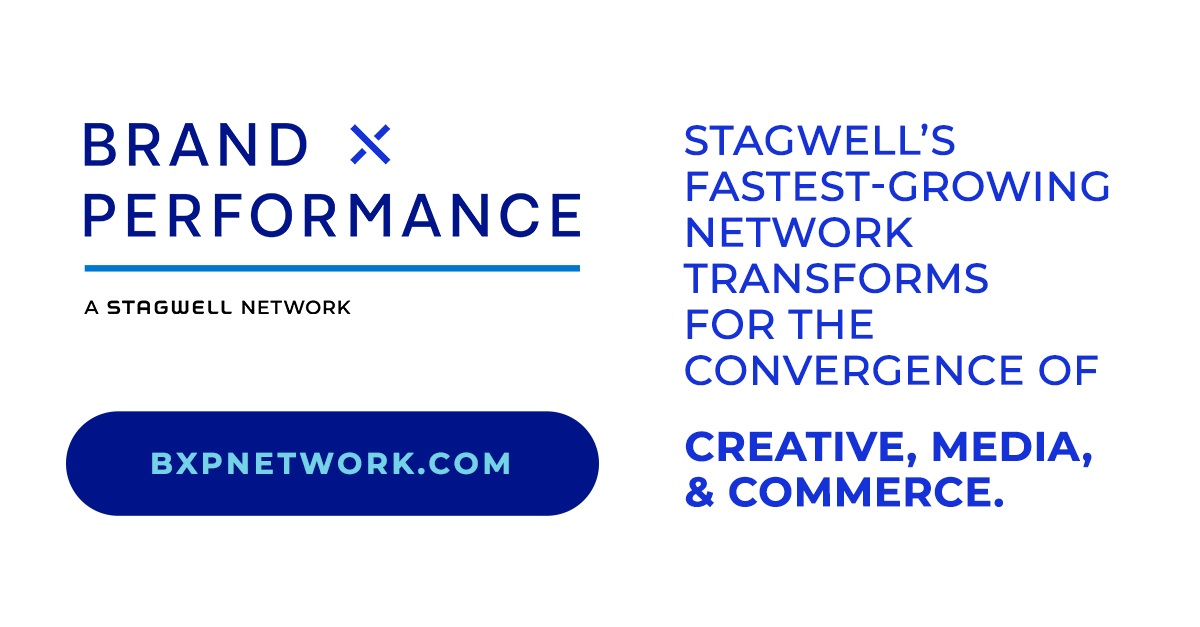
Stagwell’s fastest-growing network transforms for the convergence of creative, media, and commerce.

NEW YORK, Oct. 6, 2022 /PRNewswire/ — Stagwell (NASDAQ: STGW), the challenger network built to transform marketing, has expanded and rebranded the Stagwell Media Network to the Brand Performance Network, closing a crucial gap in the industry to produce and deliver connected solutions that perform across creative, media and commerce.

“‘Creative + Media + Commerce’ – the new equation for modern marketing – is simple, but executing against it is complex. Brands need truly integrated partners to navigate this convergence,” said Mark Penn, chairman and CEO, Stagwell. “The Stagwell Media Network has clearly resonated well with clients; look at its breakout performance and recent substantial client wins. Now, with this expansion, we’ve fully integrated creative and media, and are scaling our growing expertise in e-commerce solutions, creating a group able to activate the full equation of modern brand performance.”

The proximity of Creative X Media X Commerce is core to the Brand Performance Network’s evolved offering. Now, the network is home to more than 6,000 experts across 60 locations in 20 countries worldwide, representing award-winning creative and managing close to $5 billion in media and commerce. 

In August 2022, Stagwell integrated iconic creative agencies Crispin Porter Bogusky, Forsman & Bodenfors, Observatory and Vitro into the Brand Performance Network; Stagwell at the time also reported the Media Network posted 33% net revenue growth in the second quarter of 2022, making it Stagwell’s fastest-growing integrated network.  

“We launched the network a year ago in response to the needs of the modern marketer, to be omnichannel, data and tech-enabled, and global,” said James Townsend, global CEO of Assembly and the Brand Performance Network. “Today, we’re evolving again to reflect the drive we’ve seen from blue-chip global brands rightly demanding truly connected creative, media, and commerce solutions to unlock transformation and growth for their businesses. This will offer our people more opportunity and our clients even more value.”

“Today’s announcement is a great moment to welcome the new creative agencies and their leadership teams to the network,” said Brad Simms, president and CEO, GALE, and global chief product officer of the Brand Performance Network. “Their compelling and impactful work perfectly complements strategic media execution and personifies our focus on brand performance.” 

All agencies within the network will continue to operate under their individual brands, consistent with Stagwell’s fundamental belief in collaboration between complementary groups over agency consolidation. Brands within the network will retain their cultures and unique capability sets, while scaling through more integrated work.

The new identity is being designed by business agency GALE. 

About Stagwell
Stagwell is the challenger network built to transform marketing. We deliver scaled creative performance for the world’s most ambitious brands, connecting culture-moving creativity with leading-edge technology to harmonize the art and science of marketing. Led by entrepreneurs, our 13,000+ specialists in 34+ countries are unified under a single purpose: to drive effectiveness and improve business results for their clients. Join us at www.stagwellglobal.com.

About the Brand Performance Network
Stagwell’s Brand Performance Network is a group of leading creative, media, and commerce agencies home to more than 6,000 experts with an expansive global footprint across 60 offices in 20 countries, managing $5 billion in media. The network includes creative agencies GALE, Forsman & Bodenfors, Crispin Porter Bogusky, Vitro, and Observatory, media agencies Assembly, MMI Agency, Goodstuff and Grason, B2B specialists Multiview, multi-lingual content agency Locaria, travel and media experts Ink, and commerce experts Brand New Galaxy. The network offers marketers a more dynamic partner for global B2B and B2C connected solutions spanning data, technology, media, and creativity aimed at accelerating business growth for brands worldwide.

Contact: 
Beth Sidhu
pr@stagwellglobal.com

Related

Articles

Post Thumbnail
Post Thumbnail
Post Thumbnail

Newsletter

Sign Up

By Mark Penn 

CONTACT

hello@stagwellglobal.com

SIGN UP FOR OUR INSIGHTS BLASTS

Quick, tell me when your state’s primary was. Odds are, most Americans can’t.

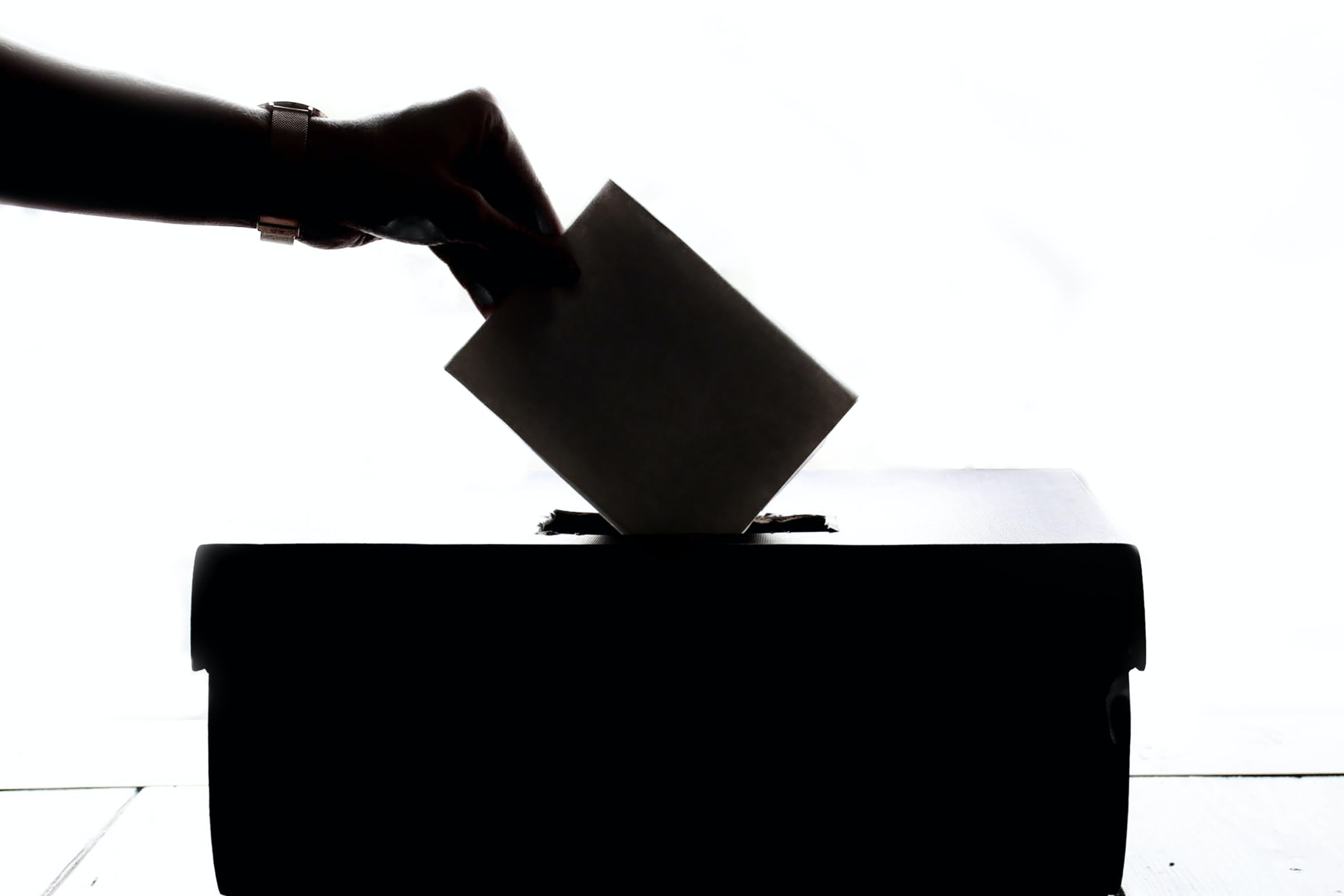
Seems like democracy is much threatened these days, and yet no one seems to care much about voting in the most important elections in the country – the primary elections. While turnout has surged in general elections, up to 67% in the last presidential race, it has gone nowhere in primary elections, with most getting between 20% and 40% of voters to the polls. But there are simple reforms that could go a long way toward fixing the primary problem.

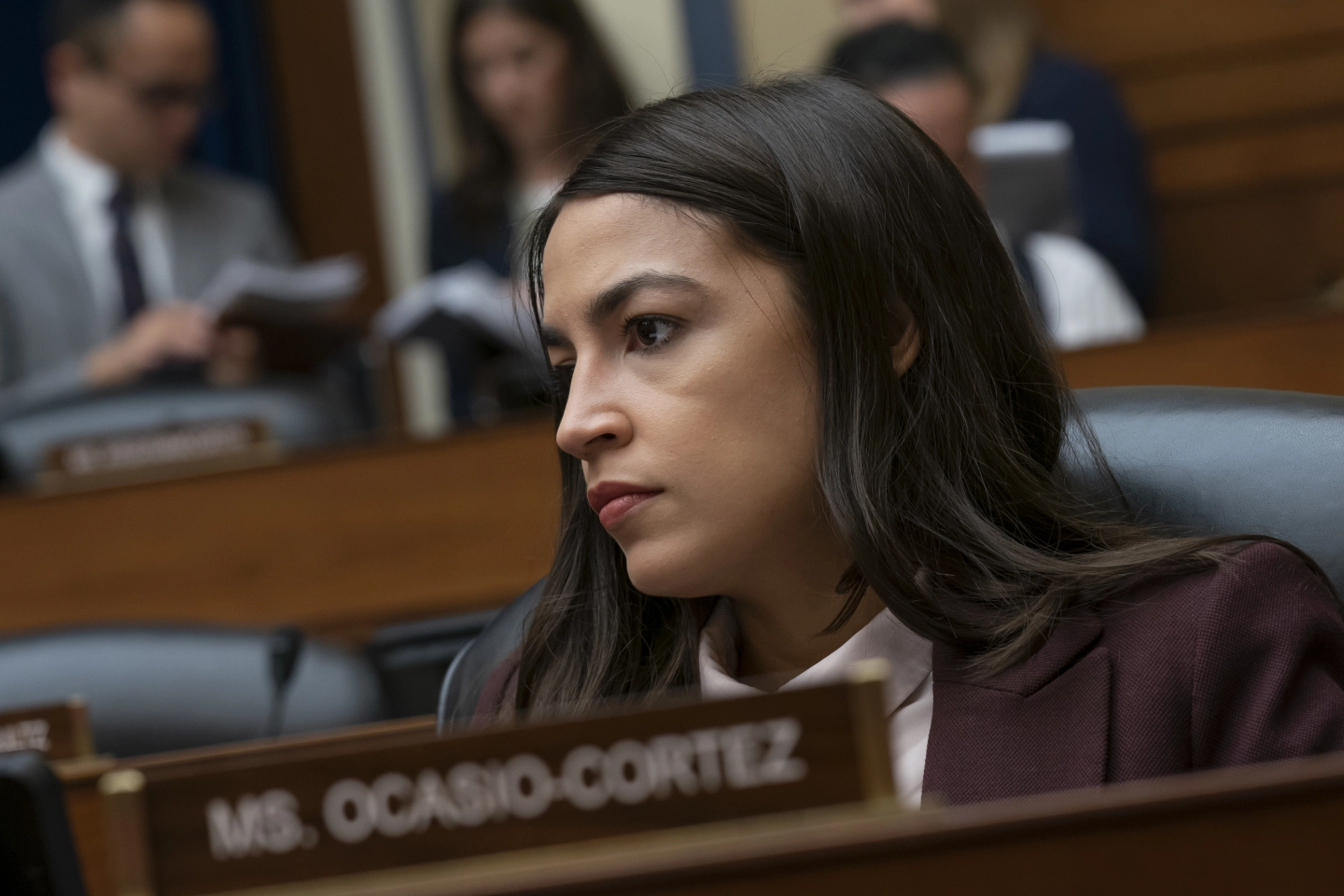
As more and more of the country is one-party territory, these primary elections really determine who governs in America and sets the ideological makeup of our leaders. Alexandria Ocasio-Cortez, one of the most outspoken members of Congress and a leader of the “squad,” was elected with fewer than 17,000 votes in a Congressional district that has nearly 700,000 people. She was able to win by mobilizing a small number of activists while the average voter was sleeping. Turnout among eligible Democrats in that key race was 13%, similar to many primaries across the country. Even in this year’s hotly contested primary for squad member Ilhan Omar, only 27% of the voters turned out.

Not only are primaries scattered over 20-odd dates from March to September, but the big money flows to partisan efforts that operate under the guise of being nonpartisan. Many nonprofit civic groups today are just taxpayer-funded partisan efforts to register voters in favorable areas or redistrict for the benefit of one party. Former Democrat Attorney General Eric Holder’s National Redistricting Foundation uses litigation to challenge gerrymandering, but seemingly only where it hurts Democrats. Youth registration–focused Rock the Vote claims to be nonpartisan, but its president released a statement explicitly lamenting Trump’s 2016 victory. Donors simply care more about who wins rather than about making the process more open, fair, and democratic, letting the chips fall where they may.

In a slew of swing-state Senate primaries in May 2022 for elections that will likely determine control of Congress, well under half of eligible voters participated. While an estimated 60% of eligible Georgians voted in the January 2021 runoffs that won the Democrats the Senate, just 27% participated in the May 2022 primary for one of those seats. Herschel Walker won the Republican nomination by receiving 800,000 votes in a state of 7 million active voters. In Ohio, only 20% of eligible voters participated in the Senate primary in which J.D. Vance cleared the Republican field. In both Georgia and Ohio, voters can participate in any party’s primary.

Things were only slightly better in Pennsylvania’s Senate primary, where 32% of eligible Democrats and 39% of eligible Republicans chose progressive John Fetterman and Dr. Mehmet Oz, respectively, over more moderate alternatives in a state that is divided quite evenly.

And these are the turnout numbers in high profile races. An abysmal 13% came out to the New York Democratic primary for governor, where Andrew Cuomo’s replacement Kathy Hochul ran for her first full term.

Low primary turnout facilitates the rise of more extreme candidates who could not otherwise be elected by a full constituency. Those who vote in primaries, especially on the right, are more strongly partisan and ideological than other Americans, according to the Brookings Institute’s 2018 Primaries Project.

Less well-known but still powerful positions like district attorney are especially vulnerable to activist candidates in a low-turnout environment. For years, left-wing billionaire George Soros has quietly given millions to “reform-minded” DA candidates, including new Manhattan District Attorney Alvin Bragg. Now in charge of the criminal justice system of the nation’s largest city, Bragg won his office last year in an eight-way Democratic primary that attracted just 250,000 voters, or 29% of the eligible population.

Nonpartisan primaries in which all candidates run on the same ballot may encourage moderation, but they have not solved the turnout problem so far. In Alaska, Senator Lisa Murkowski, the only Republican who voted to convict Trump of impeachment and is facing reelection this year, has survived a Trump-backed challenger so far only because the open primary allowed them both to advance to the general election. Yet just 26% of eligible Alaskans participated. Similarly, the only two Republican representatives who voted to impeach Trump and have survived their 2022 GOP primaries both did so in top-two systems, where the ballot includes all candidates regardless of party. Yet turnout was still low – 19% in California Congressman David Valadao’s district and 37% in Washington Congressman Dan Newhouse’s.

So with all of the hullabaloo over every single placement of a drop box, there is no outcry about how American democracy has been undermined with confusing, little-known primary schedules that favor activists on both sides.

To fix these problems we need to take some urgent steps. First, we need to shine light on this low participation and information as a problem. Second, we should deny tax deductibility status to nonprofits that are carrying out one-party agendas and encourage the growth of nonprofits that want high voter participation in all elections by all voters. Third, we need to set three or four regional primary days in which groups of states all hold their primaries at the same time to cut down on all the confusion of 20 or more possible dates. Further complicating this are Democratic campaigns to meddle with the primary process by deliberately providing tens of millions of dollars to extreme candidates they oppose and hope will be easier to defeat in the general election. Though unlikely to be banned outright, this practice further undermines the primary process, and hopefully the parties will agree to end it in the name of a fair democracy.

More extreme candidates are increasingly winning political office across every level of the country well before Election Day, with the input of just a fraction of eligible voters. If calls for higher turnout are really about strengthening democracy, primaries deserve a lot more focus. The current trend of Americans flocking to general election polls but not primary ones suggests that those calls for turnout are more about partisanship than participation.

Mark J. Penn is the chairman and CEO of Stagwell Inc., the NASDAQ-listed challenger network built to transform marketing, and co-chair of the Harvard-CAPS Harris Poll. His career spans 40 years in market research, advertising, public relations, polling, and consulting. A globally recognized strategist, Penn has advised top world leaders, including presidents, led companies, and written two bestselling books.


Related

Articles

Post Thumbnail
Post Thumbnail
Post Thumbnail

Newsletter

Sign Up

By

Natalie Oganesyan
Yahoo! Entertainment

CONTACT

hello@stagwellglobal.com

SIGN UP FOR OUR INSIGHTS BLASTS

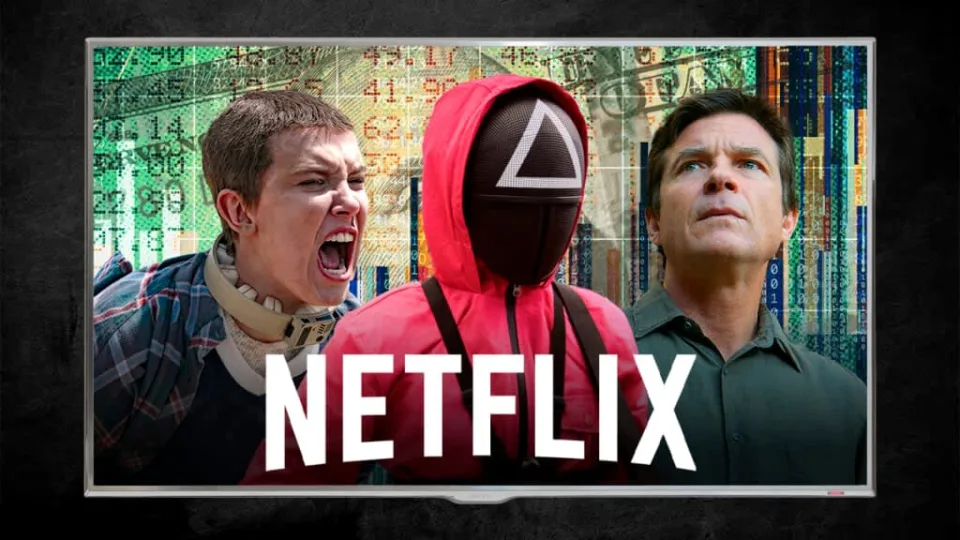
Nearly half of current Netflix subscribers (46%) would consider a shift to the platform’s ad-supported model once it’s available, according to a survey of 1,300 current users conducted by Samba TV and Harris X. The data collected also showcases that those willing to make the move tend to skew older and make less per capita, with Gen Z respondents being the least interested (at 38%) in making the switch.

As previously reported this month, the embattled streamer has plans to launch its ad-supported pricing tier in November, ahead of competitor Disney+’s own ad-supported model debut in December. Additional details on pricing have not yet been announced, but TechCrunch estimates that the cost could fall between $7 to $9. (Currently, basic Netflix plans are $9.99 a month, with standard and premium pricing at $15.99 and $19.99, respectively.) Despite mixed opinions on the matter, the data gathered by Samba TV and Harris X indicate that the tier will not present a risk to the company.

Roughly half of Netflix users (45%) said they would consider switching to a tier discounted by half of what they currently pay as long as ads totaled five minutes or less per hour. More than half (51%) would deliberate the shift should the service be free (an unlikely scenario).

A further breakdown by age and income illuminated that a majority of Boomers (52%) and almost half of Millennials (48%) would be interesting in shifting to the ad tier, whereas Gen Z, who have more or less grown up on ad-free streaming, are less inclined to do so. Additionally, a majority of those making under $75,000 expressed an interest in moving to the tier as opposed to less than half (42%) of those making over that amount.

The ad tier also opens up the avenue for Netflix to bring in more subscribers; nine out of 10 non-users already report watching ad-supported streaming content, with 1 out of 3 of them being under 35, according to a survey of 1,200 non-subscribers.

“The exciting value proposition from Netflix’s upcoming ad model lies in the possibility it offers to bring in net new or lapsed subscribers,” Samba TV CEO and co-founder Ashwin Navin said in a statement. “9 out of 10 adults who do not currently have a Netflix subscription watch other ad-supported content today, indicating these audiences have no aversion to watching ads in exchange for free or reduced price content and are prime candidates to turn to Netflix’s new ad-supporter tier.”

In all, Samba TV’s survey with the Harris polling firm collected data from over 2,500 U.S. adults from Aug. 29 through Sept. 1. The sampling margin of error of the poll is plus or minus 2.0 percentage points. The results reflect a nationally representative sample of U.S. adults, with results weighted for age by gender, region, race/ethnicity and income where necessary to align them with their actual proportions in the population.


Related

Articles

Post Thumbnail
Post Thumbnail
Post Thumbnail

Newsletter

Sign Up

By

Assembly on August 2, 2022


Originally released on

Assembly Global

Assembly’s in-house political strategy team is currently projecting a total cycle spend of $9 billion.

We’re here again, another political cycle. Is anyone else getting déjá vu?

If you’re a consumer, you might be feeling the urge to turn off your news updates and go into a political hibernation until it’s all over. But marketers get no such liberty. Why? Advertising spend is at an all-time high in the political sphere, political messaging is rampant, and your media dollars, and even, strategy are going to be impacted…we can guarantee it. Don’t believe us? The numbers speak for themselves…

Assembly’s in-house political strategy team is currently projecting a total cycle spend of $9 billion. And up to $3.3 billion of that will be spent in just a 5-week timespan. Yep, you read that right.  

Luckily for our clients (and anyone looking for expertise at the intersection of media, data, and politics), Assembly has a secret weapon: our political team and our proprietary Political Insights Dashboard, which tracks the who, what, when, where, & why of political advertising at the speed of politics itself.  

We sat down with one of our lead political strategists, Tyler Goldberg, to get an inside view of exactly what to expect this election season, plus some critical Rules of the Game in the political advertising landscape.  

But first…

Let’s set the stage for our political team, in case you’re wondering how we got here. Three years ago, Assembly placed the largest single media buy in history during the Mike Bloomberg for President Campaign. After dipping our toes – or rather – diving feet first into the political arena, we now pride ourselves on being a full-service political media agency, thanks to our in-house team of experts.  

Hear more from Tyler:


Now, let’s dig in some more…

Q: Political ad spending is pretty unprecedented, in the sense that, in such a short time span, there are more dollars in the market than perhaps ever. This happens with virtually no other verticals. Can you talk about what this means for the overall advertising landscape?

A: We’re projecting that close to $3.3 billion in political ad spending will occur between October 1, 2022, and November 8, 2022. To put this in perspective, if we combined the total media spend of any advertiser outside of political within that same 5-week timeframe, the numbers likely wouldn’t even come close. Given this, our job is to prepare advertisers for limited inventory, rising costs in certain markets, and setting them up to be nimbler and ready to respond to the changing landscape.  

Through the first half of the year, political spending is up 200% ($1.3 billion) over the 2018 election cycle and close to 20% ($433 million) over the 2020 presidential election.  

The fact that we’re already outpacing the most recent presidential election this season is astounding. From here, it’s estimated that spending will only continue to rise cycle over cycle. 


Another Rule of the Game you might not be aware of when it comes to ad inventory? TV advertisers, listen up: Within a 45-day window for a primary election and 60-day window for a general election, candidates must be offered the lowest unit rate (LUR). On the flip side, issues-based advertisers often pay premiums upwards of 50-200% higher than an average advertiser will during an election cycle, meaning, you may be facing inventory shortages.  

Q: What are some hot markets we should be watching this season, and why?

Georgia, Phoenix, Milwaukee, Las Vegas, Los Angeles, and Boston are the hottest markets on the list.  

A: You may be raising an eyebrow at LA, but our team has the ability to dive deep into the data, and we’ve determined that California has a number of very well-funded ballot initiatives that will boast tens of millions of dollars a week as we get to the final stretch of the season. Not to mention, Los Angeles also has a mayor’s race, along with five competitive congressional races within the market that will be receiving a ton of ad spend.  

Our political practice at Assembly has something that no other partner has. In addition to the scale and niche expertise in the political space, our talent + technology approach ensures we can dig into the data and surface nuances that can deliver game-changing strategic advice for both political and commercial advertisers.

Q: We know all this political messaging out in the world is impacting consumer sentiment and behavior, but how do you help advertisers really get a grasp on that? What should advertisers in other verticals be paying attention to, when it comes to potential shifts in their strategy?

Our first goal is to help our clients be aware of the areas where rates will be rising or where there may be low inventory geographically. Our second goal pertains to strategy. Our team analyzes issues that are put before voters, so we can help both our political and commercial clients understand how messaging is being received and what matters most to consumers – in real time – so they can pivot strategically when needed, ensuring their advertising breaks through in an appropriate and relevant way.  

Based on trends that we’re seeing in the market like high gas prices, for example, we’re able to work with clients in creative ways to tailor their media strategy and break through the noise.  

Q: It’s been said that every brand is political today – you simply cannot be an a-political brand. What do you make of this statement?

A: Trying to be a-political and trying to avoid taking a stance can be seen as…taking a stance. Companies and advertisers are being encouraged to take a stance from two sides; customers and employees. There is, of course, risk that follows taking a political stance, like we saw from Disney’s situation in Florida, but at the end of the day, it’s important. It’s becoming more and more a part of their being as a company.  

Don’t get caught with your head in the sand this political season. Sign up for the Assembly Dispatch[er] to get a regular pulse on the political media environment, plus strategic insight from our team.

Related

Articles

Post Thumbnail
Post Thumbnail
Post Thumbnail

Newsletter

Sign Up

By

Mark Penn
Chairman and CEO, Stagwell

CONTACT

hello@stagwellglobal.com

SIGN UP FOR OUR INSIGHTS BLASTS

When I ran campaigns, I used to lament that corporations would spend more on marketing a hamburger than marketing political ideas and efforts. Back then, campaigns were struggling shoestring enterprises. No longer.

Today, campaigns and issue groups spend billions of dollars (much of it ineffectively) on communicating to voters, and fundraising at large has become big business. Ironically, the rocket fuel for all this was not the much-maligned Supreme Court decision Citizens United that gave corporations political speech rights. Rather, it was the internet – opening up a far speedier and cost-effective method of motivating voters and fundraising from them. Everything we condemn about politics and social media today – the speed of clickbait, the sensationalizing of small news events, the partisan divide – has paved the way for online fundraising and its explosive growth.

Political advertising spend is rapidly breaking records

Political advertising will hit $7.8bn in the 2022 midterm elections – nearly approaching the $8.5bn spent across TV, radio and digital media in the 2020 presidential cycle. We are seeing continued growth in campaign spending, and each mid-term is coming close to the previous presidential runs in spend. Each president leaps to a new record in political expenditures. It will take a set of really mundane candidates with a runaway winner to break this ever-increasing cycle. Absent that, this is a double-digit growth spiral for several more election cycles. I never thought I would see $10m Congressional races and $100m Senate contests, and yet those are now everyday occurrences.

Digital fundraising is rising at a faster rate than overall spending

Of the $14.4bn in paid media spent during the 2020 cycle, 49% was raised online. The 2022 cycle should exceed $14bn in paid media spend, with over 60% likely to come from online fundraising. To put that in context – in 2014, less than 9% of the $4.4bn in contributions came in via online donors. Democrats, who are notably vocal about money in politics, spend the most – generally about 50% more than the Republicans.

Donors today are largely first-timers – and start small

For most donors over the last few cycles, giving to politics has been a new experience. Most of these contributions aren’t from big-dollar donors or PACs, but low-dollar donations from average Americans giving amounts between $30 and $100 (76.1% of Act Blue Democratic donors in 2020 were first-time donors).

Americans have a love-hate relationship with political giving. When asked to give $1 on their tax return to fund campaigns, most Americans said ‘no’ to the voluntary check-off, and the fund was running out of money. Taxpayers generally believed politicians should finance their own campaigns and leave the public out of them. In the ‘70s and ‘80s, candidates used direct mail to gather low-dollar gifts, but it was slow and expensive. In 2008, social media entered the scene and spilled over into news and politics. With its proliferation of inflammatory messages and clickbait, social media was the ideal incubator for online giving. While less than 1% of voters donated to campaigns in the past, that number is now up to 10% and continues to grow.

How companies can mimic political fundraising techniques

I always call online fundraisers the best marketers in the world. Why? Because in return for their funds, consumers get absolutely nothing of tangible value – no product and not even a tax deduction.

What makes them such good marketers? They believe in math. They have hundreds of people who craft messages, then test them methodically and go big with the ones that work. They refine their lists, carefully managing their communications to people to avoid overload or confusing and contradictory messages. And they utilize low-cost, effective messaging techniques, driving campaigns through email and increasingly via text messaging, as consumers switch their preferred communication modes.

Today, these fundraisers employ the process and rigor that most corporations should envy: ample message creation, thorough testing, careful media mix modeling and rigorous adherence to performance standards and return on investment. Politics once again leads the way in how to structure and carry out effective online marketing. This rigorous approach would and is working for commercial online marketing, though retail marketers have more limits on how aggressive they can be. Still, they can treat Thanksgiving, Prime Days and Christmas as a kind of commercial election day, working up to harvesting sales in the same way that political fundraising is mostly prospecting until the campaign’s final months. Commercial marketers can also be more aggressive via text messaging to mimic these successful political messages.

Political fundraising is only starting to hit its groove and has many potential roads for broad expansion. While online fundraising exploded in 2020, only 20% of the 180 million Americans who voted in that cycle donated to a campaign, and under 2% of the country gave over $200. By comparison, over 70% of Americans gave to charity in 2020, totaling $324.1bn in individual contributions that mirror the scale and spend of small-dollar political contributions. The addressable digital advocacy and political fundraising markets represent massive growth opportunities.

Galvanizing the masses around a cause: still the mandate

Online political fundraising is, in essence, fan marketing. It’s about getting those who care most about your brand to be even more passionate and committed. When an employee of a competitor company insults a customer, don’t just sit there – use it to your advantage and broadcast it to your loyal fans. Most commercial marketing, even online, is passionless and saccharine; if you want to be as successful as political marketers, you will have to take some risks and be bolder. Now, this may not fit all corporate brands, but that’s the advantage that upstart challenger brands have in the marketplace – they can be free to be out there, within the bounds of good humor and taste.

To be clear, political ads continue to be a discipline unto themselves, built primarily around negative messages with no clear analog in commercial marketing. Online fundraising also includes tough negative messages, but is built mainly around bringing people together as part of a group that wants to help a cause. This new technique is at the forefront of what’s possible in this new online world as more and more people are plugged into news and current events. Online fundraising can and will expand into the not-for-profit world, but it will surely lead the way in fan marketing for breakthrough companies as well.

Mark Penn is chairman and chief executive officer of New York-based marketing group Stagwell.



Related

Articles

Post Thumbnail
Post Thumbnail
Post Thumbnail

Newsletter

Sign Up

Originally Released On

PR Newswire

CONTACT:

Sarah Arvizo
Stagwell
pr@stagwellglobal.com 

NEW YORK, Sept. 30, 2022 /PRNewswire/ — Stagwell (NASDAQ: STGW), the challenger network built to transform marketing, announced its second-annual sponsorship of Advertising Week New York, the world’s largest annual gathering of marketing, media, and technology leaders. Stagwell will host two panels on the Advertising Week New York stage, sharing insider insights into the implications for brands of the explosion of political media spending and fresh insights from a new global survey on brand fandom. 

The panels will feature experts from Stagwell’s flagship omnichannel media agency Assembly and leading technology, content, and culture insights firm National Research Group (NRG):  

  • Buzz & Devotion: The Fan Economy That Makes the Niche Mainstream in Today’s Culture – Monday 10/17 @ 1:15p: Fan culture has a powerful impact on a brand’s ascension into relevance, power and popularity. Informed by new, original research, we will bring brand experts from McDonald’s together with NRG to explore the pathways for brands to successfully build and activate a fan community. Insights from NRG’s latest thought leadership research will combine with lessons learned from the birthplace of fandom — sports and entertainment — to unlock powerful insights that help brands connect and grow their most devout and influential customers. 
  • Talk Politics to Me: Why Every Brand Today Needs a Dose of Political Know-How– Thursday 10/20 @ 1:15p:  Political is THE media story of Q4 2022, and it’s never been a more critical time for all advertisers to know the rules of the game.  Join Assembly, a global omnichannel media agency – with an only-of-its-kind full-service political strategy and media practice – and experts from Lyft and SambaTV for a discussion on the path forward for brands in a politically charged media environment and the convergence of political, advocacy, and commercial advertising.  

Also at Advertising Week New York:  

In addition to staged programming, Stagwell is proud to partner with Brand Innovators to deliver access to intimate thought leadership with leading CMOs and agency experts. Sign up to follow along with insights and other content from Advertising Week New York.  

About Stagwell 

Stagwell is the challenger network built to transform marketing. We deliver scaled creative performance for the world’s most ambitious brands, connecting culture-moving creativity with leading-edge technology to harmonize the art and science of marketing.  Led by entrepreneurs, our 13,000+ specialists in 34+ countries are unified under a single purpose: to drive effectiveness and improve business results for their clients. Join us at www.stagwellglobal.com. 


Related

Articles

Post Thumbnail
Post Thumbnail
Post Thumbnail

Newsletter

Sign Up

International Podcast Day is upon us – and after the gold rush of podcast deals, advertising partnerships, and content launches in 2022, there’s a sea of choices to sift through as you’re setting your morning playlist. We’re sharing some of our favorite podcast series from across the Stagwell network

The Harvard-Harris Poll Debrief with Mark Penn

Harris Poll chairman Mark Penn and The Hill’s Julia Manchester discuss results from the latest Harvard CAPS-Harris Poll on voters’ political beliefs. Each month Mark picks one word to best describe the state of public opinion.


Is This Thing On? – GALE

“Is This Thing On?” is a podcast from GALE, exploring marketing, life, and random thoughts with business and creative leaders from around the globe. Past guests include Chipotle CMO Chris Brandt, iHeartMedia CMO Gayle Troberman, Discovery Global CMO Patrizio Spagnoletto, and more!

Brand on Purpose with KWT Global’s Aaron Kwittken

Purpose and profit can coexist. In fact, purpose-driven businesses often find greater success when they authentically connect their brand and mission with a cause that aligns with consumer vision. Brand on Purpose is an engaging and popular podcast focused on uncovering the untold stories of entrepreneurs and senior leaders who have discovered how to serve a greater good while building or transforming major brands.

America This Week –  The Harris Poll

Each week, we surface the most important societal shifts, consumer sentiments, and marketplace trends leaders need to know to stay in lockstep with consumers’ shifting desires. Grounded in weekly polling data, ATW is hosted by NYT bestselling author John Gerzma, CEO of The Harris Poll and futurist Libby Rodney, CSO of The Harris Poll.

THE STREAM – Allison+Partners

In a world awash with hot takes and ALL CAPS TWEETS, it’s easy to get so lost in the debate that you forget what the story was in the first place. Never fear, hosts Owen Clark and Micah Baro are your guides through today’s turbulent communications landscape, combining candid interviews with experts with their own unique perspectives gleaned from a decade working across journalism, public relations, video production and corporate sales. The Stream podcast is presented by Allison+Partners – which means no ads!

STUFFED in Your Ears – Goodstuff

Listen to topical conversations from Goodstuffers and never-before shared insights from special industry guests.


Related

Articles

Post Thumbnail
Post Thumbnail
Post Thumbnail

Newsletter

Sign Up