In the News


WHAT THE DATA SAY: Shopping malls make a comeback with 81% visiting more than once a month
By: Ray Day
CONTACT:
We wanted to share our latest consumer and business insights, based on research from Stagwell and Allison Worldwide. Among the highlights of our weekly consumer sentiment tracking:
THE MALL COMEBACK IS REAL
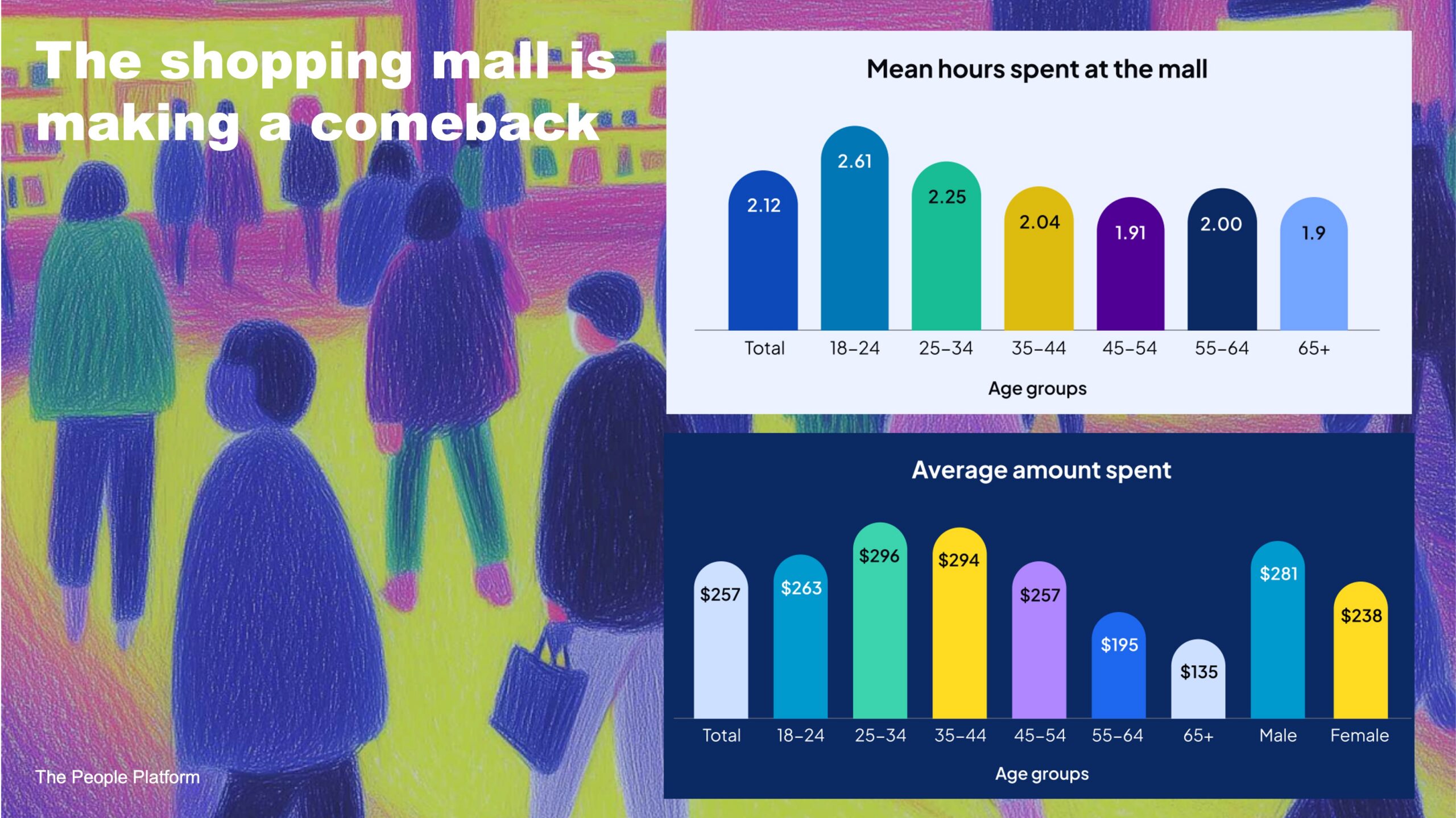
Malls remain a valuable retail environment, with younger shoppers driving long dwell times, apparel leading foot traffic, and adults 25–34 delivering the highest per-visit spend, according to new research from Stagwell’s The People Platform.
- 81% of mall shoppers visit more than once a month, underscoring the mall’s continued role in regular consumer routines.
- Reasons to visit other than for shopping include socializing (21%), exercise (14%), services (8%) and passing time (5%).
- Shoppers ages 25–34 spend an average of $296 per visit, the highest of any age cohort.
- Gen Z mall-goers spend 2.6 hours per visit on average, the longest dwell time of any age group. The average mall trip lasts 2.12 hours.
- 65% of mall visitors shopped at a clothing store, making apparel the mall’s biggest traffic driver.
- 51% of visitors who went into a clothing or accessories store made a purchase, a strong conversion rate for the category.
- The mall remains more than just a shopping destination, as 46% visited the mall to eat at a restaurant or in the food court.
- See also: People are Tracking Spending More Closely — Should You?
GLP-1 STIGMA LINGERS
GLP-1 use is widespread in both the U.S. and UK, yet attitudes remain divided between seeing the drugs as a legitimate health tool and a cosmetic shortcut, according to new research from HarrisX and Allison.
- 24% of Americans and 16% of Brits say they have used a GLP-1 medication, and another 23% of Americans and 30% of UK adults say they are open to or actively considering taking one.
- Half of Americans say using GLP-1s for weight loss is a responsible health choice, compared with 37% of Brits.
- At the same time, 50% of Americans and 63% of Brits say using GLP-1s is a shortcut.
- Nearly three quarters of Americans and 78% of Brits believe too many people are using GLP-1s for cosmetic weight loss.
- Two thirds of Americans and 55% of Brits say GLP-1 use is socially acceptable.
- Among current users, 64% of Americans and 51% of Brits say they are open about taking the drugs.
- Roughly half in both countries say creator conversations help reduce stigma around GLP-1 use.
MANUAL WORK EATS UP THE WORKDAY
While most enterprises have adopted AI, many employees still spend significant time moving data, reconciling reports and redoing work because core systems remain disconnected, according to our Harris Poll data with Workday.
- 1 in 5 workers lose at least seven hours a week moving information between systems.
- 81% of enterprise decision-makers say leaders spend significant time moving information between systems, and three quarters say leaders also spend significant time reconciling conflicting data or reports.
- Despite the friction, 97% still rate their day-to-day work experience positively, suggesting the issue is more about systems than morale.
- Globally, 43% of employees say they have busy-but-unproductive days often or very often. In the UK, that rises to nearly 60%.
- In HR, 70% report spending significant time redoing work due to system issues, the highest rework burden of any function.
- In finance, 1 in 5 say AI has accelerated work without improving results, the highest rate of any function.
- Even so, 70% of operations respondents say AI has reduced their time on tasks, the highest of any function.
AI ISN’T THE BOSS
Both hiring managers and workers still see clear limits on where AI should replace human involvement, based on a survey from Harris Poll and Express Employment Professionals.
- 9 in 10 U.S. hiring managers say AI will never replace the need for actual employees at their company.
- 92% say their company is committed to preserving a human element in the workplace.
- The top functions where companies most often prioritize people over AI are Human Resources (59%), Customer Service (57%), Ethics and Compliance (47%), Information Technology (43%) and Sales (39%).
- 82% of hiring managers and 76% of job seekers say crisis situations or emergencies should still involve people.
- Hiring managers also want people involved in reviewing applications and selecting candidates for interviews (79%).
- 77% of hiring managers say humans should remain the first point of contact for customer issues or questions.
- See also: 73% of On-Site Employees Are Frustrated with Their Workspace
ICYMI: In case you missed it, check out the thought-leadership and happenings around Stagwell making news:
- The game is 90% offense for communications pros who need to be data-led, digital-first and future-focused (Ray Day, Allison and PRWeek)
- The Pulse of Cannes reveals what really made an impact during 2026’s International Festival of Creativity (Stagwell Marketing Cloud and Allison)
- Mobile-first preferences are rewiring consumer expectations for corporate payouts (National Research Group)
- Listeners are turning to YouTube for audio more than any other platform (Harris Poll)
- 6 International Cities Seeing the Biggest Surge of Americans Relocating Right Now (Harris Poll)
Newsletter
Sign Up

Related
Articles
Weekly Data
Sep 03, 2026
WHAT THE DATA SAY: 47% of Americans see personal finances worsening, 32% improving
In the News, Press Releases
Sep 02, 2026
August Harvard CAPS / Harris Poll: Trump Approval Sees Slight Improvement at 44%

In the News, Press Releases, Stagwell Marketing Cloud
Sep 02, 2026
The People Platform Unveils New Identity as Numetrix